Key Highlight
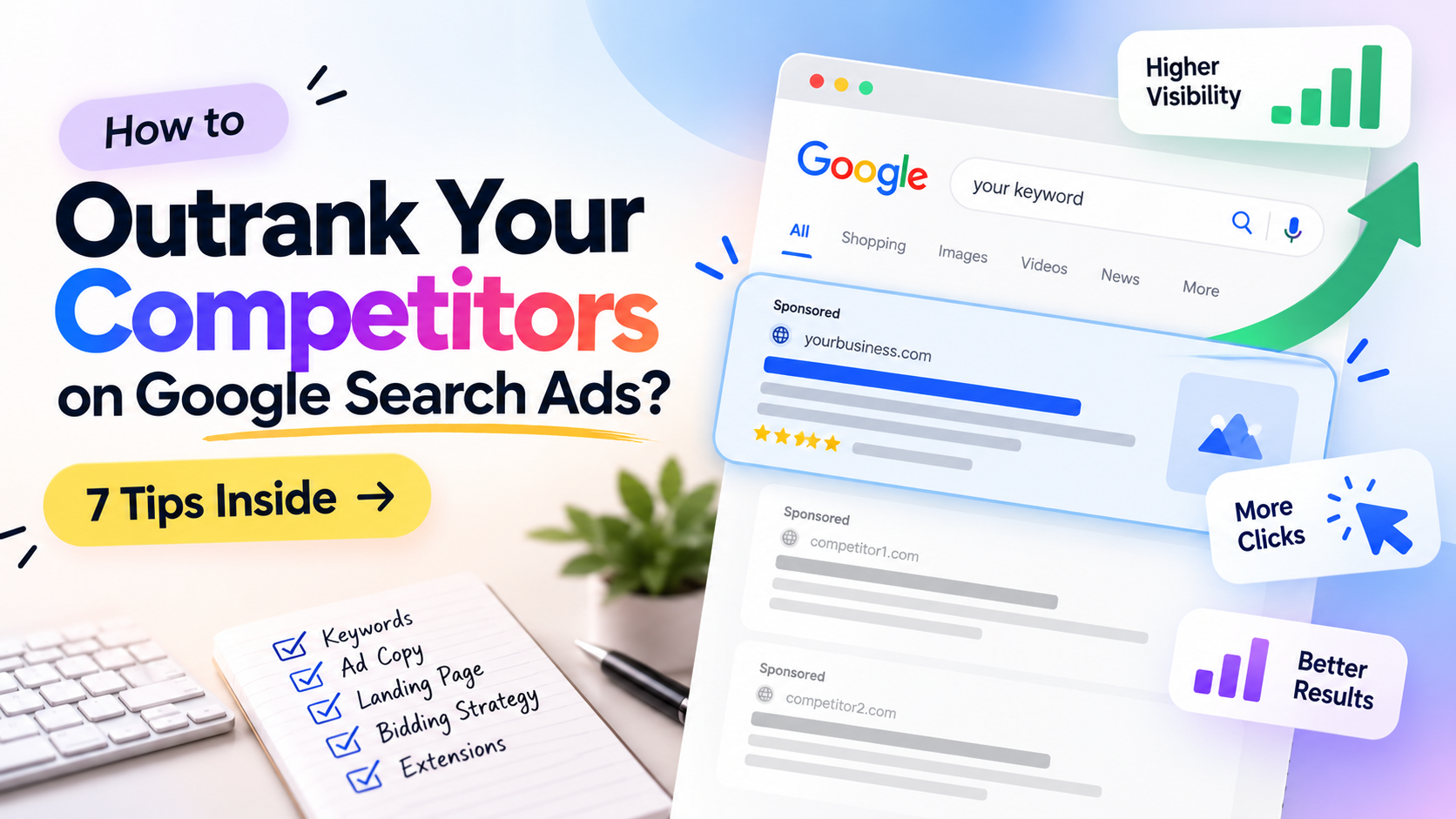
- If you want your Google Search Ads to beat your competitors, you must not view ad positioning as a game of bidding.
- Start focusing on the factors that will help your Google Ads seem more relevant.
- Researching competitors, targeting relevant keywords, creating compelling ad copy, having strong ad quality, and improving landing page experience will help your search ads perform better than your competitors’.
Google Search Ads are important for every business that wants to attract people actively looking for the same sales or services on Google. While they can generate traffic and leads, they don’t guarantee success when you’re competing for the same audience.
With several companies having the same target market, outranking competitors in Google Search Ads can be challenging. Increasing visibility in search ads requires a better understanding of how to make your ads competitive and relevant to the user rather than just increasing the ad spend.
7 Tips To Optimise Google Search Ads To Improve Visibility and Ranking
Improve your Google Search Ads performance keeping these simple tips into practice. These strategic tips will help you build a more effective approach and achieve more value from your Google Ads campaign while preventing common mistakes.
1. Competitor Analysis Before You Start
Spending time doing a deep competitive market analysis is an important step to take. Study their headlines, descriptions, deals, calls to action, and what they claim to be the benefits. In this way, you will have a better understanding of the messaging strategy that they use to get new clients.
You will be able to find their weak points and use them to create your own successful ads. Competitor analysis does not mean copying them. The goal is to understand the market and find better ways to position your own ads.
2. Target the Right Keywords and Search Intent
Keywords are an important part of a Google Search Ads campaign. Instead of choosing keywords based on high search volume, one should go for keywords that are highly relevant to the customer’s needs. The understanding of search intent leads to finding customers who are more likely to be interested in buying services offered by you.
Let’s take an example:
If you own a digital advertising company and offer services like Google Ads Management, then a user searching for “Google Ads Management” might be interested in hiring such an agency. However, a user searching for “How to run Google Ads” may only want to know about that.
Look how both searches are related, but the intent is different. So choosing keywords that are related to your business is a safe step to take. This will help your ads to reach people who are more likely to be consumers instead of wasting your budget on unrelated searchers.
3. Create More Relevant and Compelling Ad Copies
The ad copy that you will create must communicate the benefits they will get right away to your customers and also why they should choose you. Keep the message clear and closely related to the keyword being searched.
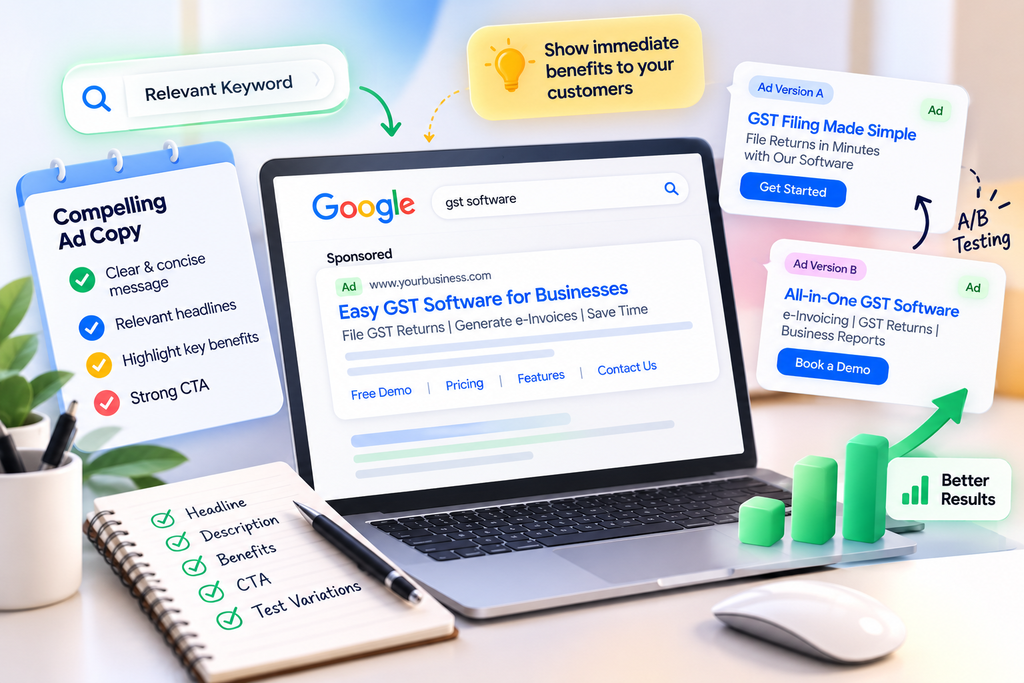
- The message must be concise and easily connected with the keyword that is being used in the search.
- Instead of creating an ad copy that contains a great deal of information, create one that is brief and to the point.
- Create headlines relevant to your landing page which helps in increasing the quality score of your ad.
- The call to action (CTA) must be present to tell the user what to do next.
Another worthwhile way is testing different ad copy versions. Changing headlines, descriptions, benefits, or call to action will assist you in comparing which ad copy brings you more potential leads or connects better with the audience. These changes will help you develop more relevant and effective Google Search ads.
4. Work on Improving Ad Quality
Google Ads considers how useful and relevant your ad is for a particular search. To improve ad quality, use relevant keywords, keep your ad groups well organised, and use the correct landing page ensuring relevant headline and descriptions in the ad copy.
Make sure your ads closely match the search terms you are targeting for. Avoid grouping unrelated keywords, as this can make your ads less focused.
Also keep reviewing your campaigns regularly to find the area which needs improvement while using the data to understand what is actually working. Also, keep a track on CPC, and daily ad budget spent. It will help you improve Google ad quality score and overall campaign performance.
5. Improve Landing Page Experience
- Make the landing page match your advertisement: The landing page should include everything that the user is expecting when clicking the ad. The content of the landing page should be aligned to the keyword and offers present in the ad.
- Loading speed matter: People will leave your page if it takes more than 2-3 seconds to load. Thus, ensure your targeted product/service pages are optimized enough to open lightning fast on computer and mobile devices.
- Organise the information: Keep the information well organised on the landing page. Make sure that the important information is easily available, and also make use of headings, well-organised short paragraphs, and proper spacing.
- Make the page user-friendly: It is necessary that the page should be simple and organised so that the information presented is easily accessible without any confusion, and there is a proper CTA.
6. Track and Optimise Your Campaign
It is necessary to regularly monitor your Google Ads campaign to know which parts are working well and which parts require improvement. Focus on metrics like
- CTR
- Impressions
- CPC
- Impression share
- Keyword performance
- Cost per conversion
Further, you can use these data to make changes and improvements in your Google Search Ads campaign and running remarketing campaigns. You can optimise Google Search ads using exact match keywords and fix underperforming and negative keywords, or you could even change your target audience.
Don’t forget to monitor the results after each and every change that you make in order to identify what is causing the success of your campaign. Don’t attempt to make all the changes at once; rather, make changes in bits.
7. Use Ad Assets To Strengthen Your Ads
Ad assets are very important and contain vital information that Google can display with your search ads to inform people about your business in detail. You can include sitelinks, callouts, phone numbers, structured snippets, locations, photos, and other useful information.
Use the assets that you have, as they will assist in your campaign and provide valuable information before clicking. Make sure that the information is relevant to your ad and is always updated with accurate information. Relevant ad assets can be quite informative and can provide users with more choices to check out your business.
Common Google Ads Mistake That Can Keep You Behind Competitors
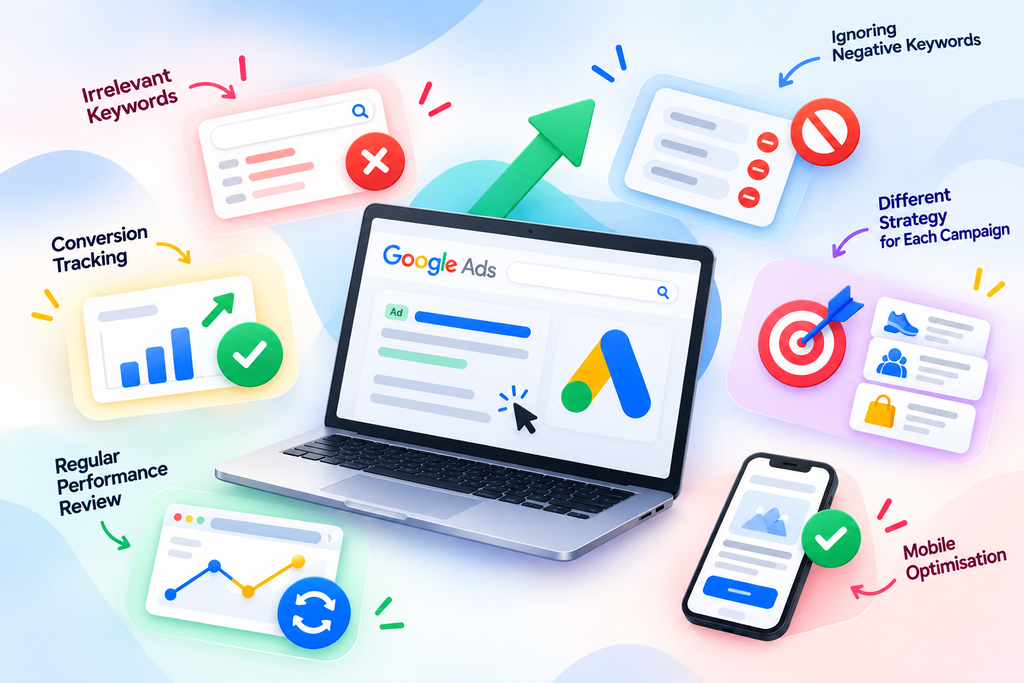
- Use of irrelevant keywords: Avoid using keywords that may result in getting traffic from people who have no interest in your product or service.
- Ignoring negative keywords: It is necessary to be careful about irrelevant searches that may be wasting your money.
- Skipping conversion tracking: You should be able to track important conversions such as lead generation, calls, and sales.
- Implementing the same strategy in every campaign: Different products, services, and audiences, or even target audiences, may require different keyword bidding strategies and targeting strategies.
- Not reviewing the performance of campaigns: Do not leave your campaign without changes for a long time; always review the performance of the campaign and optimise it.
- Ignoring mobile optimisation: You should ensure that your ads redirect to landing pages that are mobile-friendly.
Conclusion – Build a Smarter Google Search Ads Strategy with Digital Narada.
Outranking your competitors in Google Search Ads doesn’t rely only on boosting your advertising budget. It depends on doing things right at every level of your campaign, from choosing the proper keywords to optimise ad and making a good landing page that converts. You can also connect Digital Narada to create a data-driven strategy based on your business objectives, customers’ behaviour, and marketing objectives. We can help your business grow with a combination of customer insights, data-based decision, artificial intelligence, performance marketing and campaign scale up.
FAQs
1. How can I outrank my competitors in Google Search Ads?
You can outrank your competitors by focusing on keywords, strong ad copy, high ad quality, a great landing page experience, and regular campaign optimisation.
2. What are ad assets in Google Search Ads?
Ad assets provide additional information with your ad, such as sitelinks, phone numbers, locations, and other important details, providing users with more ways to explore your business.
3. Will bidding higher help my Google Ads ranking?
No. Not always. A higher bid can help, but ad quality matters more than the bid; the landing page, relevancy, competition, and some other factors can also affect ad ranking.
4. How frequently should I optimise my Google Search Ads campaign?
You need to optimise your Google Search Ads frequently and make changes according to their performance.