
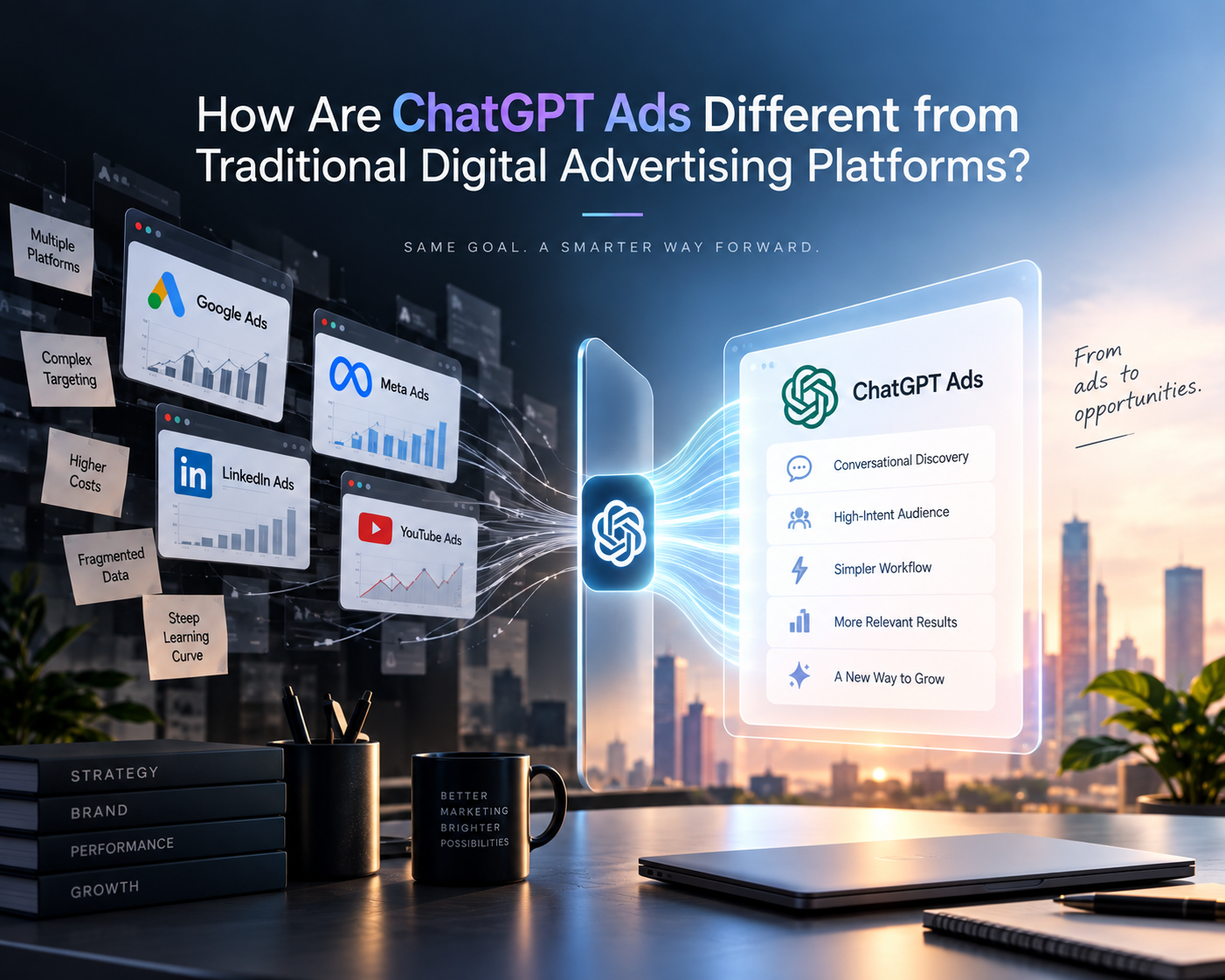
For years, most advertisers have been running digital ads through platforms like Google Ads, LinkedIn Ads, and Meta Ads. In those tools, companies set things like keywords, audience groups, ad placements, and daily or total budgets. Then the platform decides which users should see the targeted ad copies. And recently, OpenAI has added its own ad option called ChatGPT Ads.
GPT ads work in a different way. The goal is to show a brand inside a chat space where people are already asking questions and comparing options. The ad shows up in the middle of that ongoing conversation about related products when the user is trying to decide what to choose.
OpenAI started testing ads in ChatGPT in the United States on February 9, 2026. The company has since expanded the program into more markets. OpenAI announced that advertisers could buy ChatGPT ads directly through Ads Manager across India, Europe, the Middle East, and North Africa as of August 31, 2026.
But how different are ads on ChatGPT from other platforms like LinkedIn ABM, Google AdWords, Facebook and Instagram advertising, YouTube ads, and more? And how can you leverage it to expand ad targeting? Let us examine this step by step along with tips to get the most out of GPT ads.
What Are the Popular Digital Advertising Platforms?
Businesses today have several major advertising options.
1. Google Ads: Useful for capturing active search demand through Google advertising and CPC-based campaigns.
2. LinkedIn Ads: Particularly useful for B2B campaigns, professional audiences, and LinkedIn account-based marketing.
3. Meta Ads: Facebook, Instagram, and WhatsApp advertising are widely used for interest-based, demographic, and behavioral targeting.
4. ChatGPT Ads: OpenAI ChatGPT Ads is an emerging AI advertising platform designed around conversational intent and decision-making.
This does not mean ChatGPT Ads will replace Google Ads, Facebook Meta Ads, or LinkedIn advertising. In many cases, businesses may use these channels together as part of a broader digital marketing strategy.
What is ChatGPT Ads?
ChatGPT ads is a paid advertising platform that shows up inside the ChatGPT conversational chat. It is created to reach people while they are looking at options, comparing choices, or deciding on something through a chat.
Unlike traditional pay‑per‑click ads that target search terms like best running shoes, top marketing companies, how to set up an ABM campaign, etc., ChatGPT product ads can use the flow of the conversation to decide if an ad fits with what the user is trying to do.
Also, the ads served by OpenAI appear separate from ChatGPT’s answers and are clearly marked as sponsored content. And as it’s auto-decided by the GPT algorithm, advertisers don’t have any choice or access to influence the ad placement inside the ChatGPT answers.
When did ChatGPT Ads launch?
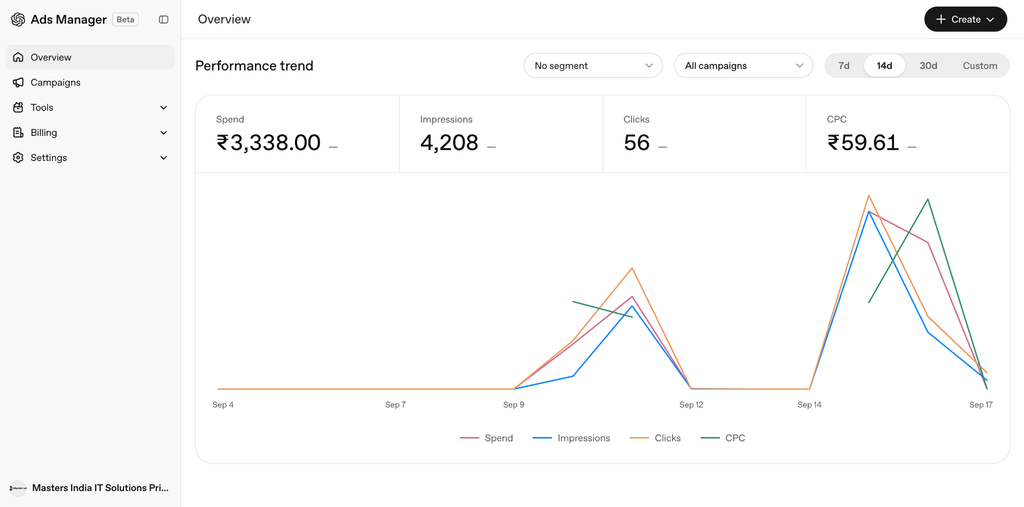
On 9 February 2026, OpenAI started its initial ChatGPT advertising test in the United States. After this, the company started expanding its advertising program into multiple markets as well. Thus, far the advertising platform has developed considerably.
Initially, OpenAI tested CPM buying; then they introduced CPC bidding, and now they also support CPM, CPC, and conversion-optimized CPC objectives through Ads Manager. This means businesses should not see OpenAI ChatGPT ads simply as another banner-ad network. Businesses should consider it an AI-native advertising platform built around conversational intent.
Quick Differences – ChatGPT Ads vs. Traditional PPC Advertising
| Factors | ChatGPT Ads | Traditional Paid Advertising |
| Ads environment | Conversational AI | Search engines, social networks, and websites |
| Targeting intent | Conversational tone | Search terms, demographics, interests, or behavior |
| Targeting options | Context, location, and supported audience signals | Keywords, interests, locations, marketing audiences, behaviors |
| Keyword dependency | Less dependent on exact keywords | Often heavily keyword-driven, especially Google Ads and Bing Ads |
| Creative approach | Conversational and benefit-focused | Search, display, social, and video formats |
| Ad serving | Within the ChatGPT interface | Search result page, video, reels, feeds, third-party websites, and other placements |
| User journey | Explore, then compare, and finally decide | Search/scroll, then click, and finally go to the website |
| Ads Buying Models | CPM, CPC, and oCPC objectives | CPM, CPC, CPA, and other models depending on the platform |
| Data sharing | Advertisers receive aggregated reporting. | Varies by advertising platform |
| Best opportunity | Capturing users during exploration and decision-making | Capturing search demand or reaching defined audiences |
The biggest difference is, therefore, context. Google advertising can understand what someone searched for. Social platforms can understand audience characteristics and behavior. ChatGPT Ads can operate within a conversation where the user’s problem, preferences, and intent are being expressed naturally.
How Does ChatGPT Advertising Work?
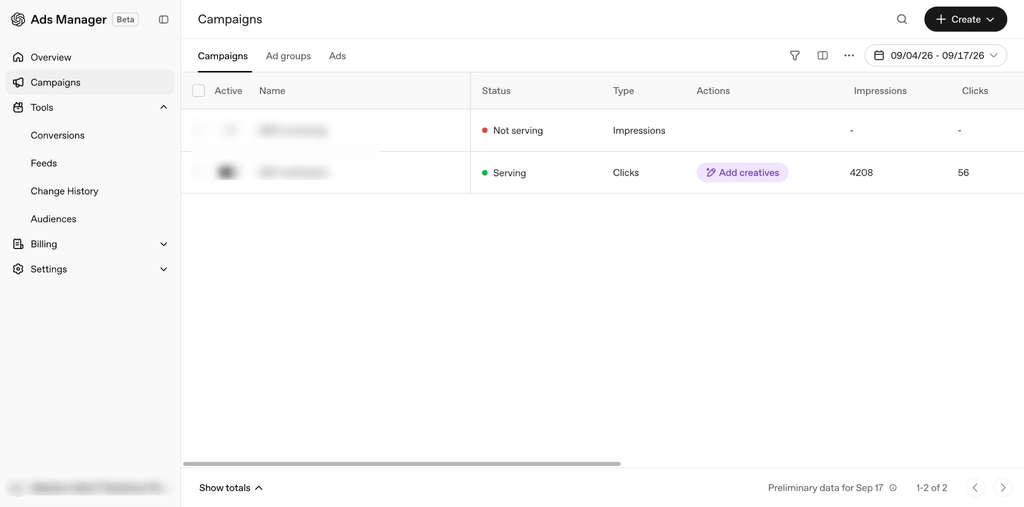
At a basic level, advertisers create campaigns, select objectives, define budgets, and target supported countries or audiences. Ads can then be delivered based on relevance signals within the ChatGPT experience.
ChatGPT can consider the context of the current conversation. And, where ad personalization is enabled, certain signals from the user’s broader ChatGPT experience. Importantly, these signals are kept within ChatGPT and are not shared with advertisers as users’ private conversations or personal information.
The current ad format can include an advertiser name, logo/favicon, headline, description, landing page, and image. Ads appear below. ChatGPT responses are visually separated from the assistant’s answer.
What Makes GPT Ads Different Than Traditional Advertising Platforms
1. Advertising Principle
Common PPC platforms, including Meta, LinkedIn, and Google Ads, usually tries to put an ad before the right audience or next to the right search query. But ChatGPT takes a conversational approach. The goal is to show an ad when it is relevant to what someone is trying to do. For example, if a person asks ChatGPT to compare laptops, then they might see a product ad while they are making that decision.
2. Audience Targeting
Google, LinkedIn, and Facebook, all major advertising platforms, offer the benefits of targeting suitable audiences based on age, interests, keywords, browsing habits, and other factors.
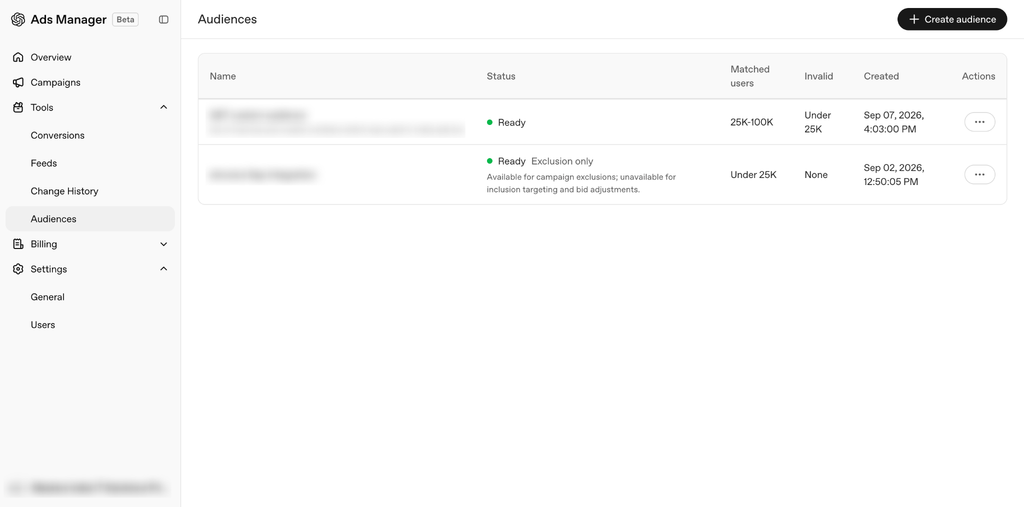
ChatGPT ads give the benefits of targeting an audience based on context and conversational intent. OpenAI has also added gro-targeting and custom audiences as the platform has grown. This gives a better chance for advertisers because the user’s intent can be expressed in natural language instead of a short keyword.
3. Ad Formats
Search ads, display banners, social posts, carousels, videos, and other formats are included in traditional advertising methods. But the current ChatGPT ad format is tightly linked to the conversation and its intent. Ads can have a headline, description, advertiser identity, image, and a landing page.
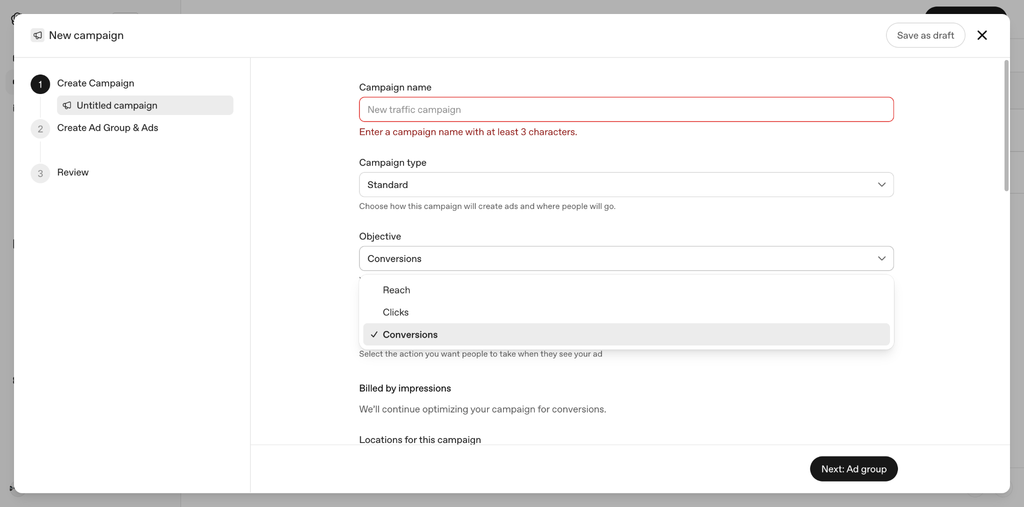
4. Ad Creation
Google Ads often requires businesses to think in terms of keywords and search intent. Social advertising needs creative design for feeds and scrolling behavior.
ChatGPT ads require advertisers to think more about the user’s problem and also about the practical benefit of their product.
OpenAI recommends specific and benefit‑focused messages instead of generic ad copy. It also recommends making variations so the system can find more relevant situations.
5. Ads Placement
Traditional platforms like Meta, Google, and LinkedIn have set placements such as search‑result pages, Instagram feeds, Facebook feeds, LinkedIn feeds, and display networks.
ChatGPT ads appear inside the ChatGPT experience below answers while staying clearly apart from the AI‑generated answer.
6. Intent‑Matching
ChatGPT ad audiences targeting is probably the most important difference. Let’s understand it with a simple example.
A traditional PPC campaign may target “Accounting Software” as a keyword, topic relevancy, or search intent.
At the same time, a ChatGPT user might instead say, “I am starting a small business, and I need affordable accounting software that is easy for a beginner to use.”
The second example has a lot of context. This intent-matching feature is one of the interesting parts of the ChatGPT ads. The OpenAI ChatGPT advertising platform can use the conversation instead of just a short search phrase or keywords for better audience reach.
7. Bidding Type
The very first buying model of ChatGPT ads was CPM (cost per thousand impressions) based. However, OpenAI later added CPC bidding, and the current Ads Manager documentation lists CPM, CPC, and oCPC (conversion‑optimized CPC) objectives. So businesses should not mention that chatgpt ads campaign are only CPM‑based.
8. Data and Reporting
Traditional advertising platforms like Google Ads, Facebook Ads, or LinkedIn Ads Manager offer tracking metrics such as impressions, clicks, CTR, conversions, and cost.
OpenAI ChatGPT ad campaigns also provide performance measurement. OpenAI has added tools like the OpenAI Pixel and the Conversions API to help advertisers see business outcomes.
OpenAI also keeps a separation between advertisers and users’ private conversations. Advertisers do not get users’ chats, chat history, memories, names, or exact location.
9. Customization Flexibility
Traditional advertising platforms like Google advertising, Meta advertising, and LinkedIn ABM have matured their advertising ecosystems with proper campaign controls. But recently launched ChatGPT ads are new for digital marketing ad agencies and individual professionals.
Though the controls and ChatGPT Ads formats inside the ChatGPT Ads management system are still growing, the platform already supports campaign objectives, budgets, countries, platforms, and optional custom audiences. This means advertisers can expect the platform to grow more sophisticated as OpenAI keeps expanding its advertising infrastructure.
What Are the Similarities Between ChatGPT Ads and Other Digital Advertising Platforms?
Even though there are differences, ChatGPT Ads still follow familiar digital marketing principles.
Businesses still need the following while creating a PPC strategy:
- A clear campaign objective
- A defined target audience
- Strong advertising creative
- A compelling value proposition
- An effective landing page
- An appropriate budget
- Performance tracking
- Continuous campaign optimization
In other words, understanding Google Pay Per Click campaign ads, LinkedIn advertising, Facebook ad management, and other traditional pay-per-click campaigns can still provide a useful foundation for managing ChatGPT Ads.
The major difference is where and how the user’s intent is understood.
Best Practices for ChatGPT Ads to Improve Campaign Performance and ROI
Businesses that are just entering into this advertising channel should focus on making their ads more relevant instead of just trying to make more ads.
1. Focus on the customer’s problem
Tell people about what your product does and exactly who this product or service is for. Stay away from general words when writing your ads.
2. Use benefit-focused copy
Let people know about the value that they can get from using your products or services. OpenAI says that clear, specific, and benefit-focused messages work best.
3. Create creative variations
Instead of using just one headline and one description, try different benefits, different situations, and different ways to present your message.
4. Match your landing page
The experience should flow smoothly after someone clicks on your ad. Your landing page needs to deliver what your ad promised.
5. Measure more than clicks
Look at the results, like conversions and other business outcomes, instead of just looking at how many people saw your ad or clicked on it.
6. Start with an audience and objective
Don’t try to reach everyone with your ad. Start with one product, one specific group of people, and one clear business goal, then grow from there on the basis of what works.
Digital Narada Recommendation to Leverage the Full Potential of ChatGPT Advertising
- Don’t assume that ChatGPT Ads is not useful for your business. Instead, start with a test campaign before ruling it out.
- To analyze the performance of ChatGPT ads, you need to invest time to understand the mechanism behind this platform. So run a campaign with your desired budget for a couple of months, and then only analyze the actual outcomes.
- Meta, LinkedIn, and Google Ads are primarily based on keywords to deliver leads, but ChatGPT ads are based on conversational intent, not on keyword focus. It gives quality leads, but the cost is slightly higher compared to Meta and Google Ads, but lower than LinkedIn.
- With ChatGPT ads, you can track conversions with ease, as it supports custom conversion events and data sources.
- Take control of your audience segment to avoid excessive spending, as ChatGPT gives you access to build a custom audience.
- To get effective results, you must test your campaign objectives and understand which sections are giving effective results.
- Bring your creative team on board, as you will need strong headlines, an engaging message section, and appealing visuals in your ad copy.
- Don’t be in a hassle while taking any decisions based on the results of ChatGPT ad campaigns, as this platform needs data. So, initially, you need to provide quality data to ChatGPT that will help this AI to understand your objectives smoothly.
- ChatGPT ads are in the beta phase, which means it’s still in the development phase, so some features may change over time. Hence, you must consider this point while managing your ad campaign.
- Never replace the existing online advertising source with the new one, as Google and Meta are still effective, and completely relying on ChatGPT is not an ideal solution for generating leads. So, you must blend these sources, i.e., ChatGPT ads, Google, and Meta, to reach your potential audience.
Verdict – Be the Early Birds With an Innovative ChatGPT Ads Agency
ChatGPT ads are not an extremely different form of advertising technique. ChatGPT ads introduce an advertising module where conversation and intention can play a great role.
Google Ads still works well for grabbing people who are already searching. Meta Ads still work well for finding people and for social advertising. LinkedIn advertising is still useful for business‑to‑business campaigns. But ChatGPT creates a new opportunity for businesses to reach people while they are actively exploring, comparing, and deciding.
For a ChatGPT Ads Agency, it also creates an opportunity to develop new skills around conversational intent, AI‑native creative, audience strategy, and campaign optimization.
The platform is still fairly new, so learning ChatGPT Ads Management early gives an advantage rather than waiting until the market becomes crowded.
If your business is already spending money on Google Ads, Facebook Meta Ads, or LinkedIn advertising, then ChatGPT Ads might be worth trying as a channel instead of replacing your current campaigns.
If you are ready to see if ChatGPT Ads can fit into your marketing plan, then schedule a call with Digital Narada and talk about the best approach for your business.
FAQs
1. What is ChatGPT Ads Manager?
ChatGPT Ads Manager is the platform introduced by OpenAI where businesses can create, run, and track ads. With ChatGPT Ads, advertisers can choose their marketing objectives, set how much to spend, decide who sees the ads, and pick the ad copy or images. After setting them up, they can watch how the ads are performing by using the built-in tools of ChatGPT Ads Manager.
2. Are ChatGPT ads India live?
Yes. OpenAI announced on August 31, 2026, that advertisers could purchase ChatGPT ads directly through Ads Manager across India, Europe, the Middle East, and North Africa.
3. Are ChatGPT Ads Effective for B2B?
Yes, ChatGPT Ads can be effective for B2B marketing by reaching users who are actively researching solutions and comparing options. They can help businesses connect with potential customers who are closer to the decision-making stage.
4. How to get ChatGPT Ads access?
Businesses can sign up through OpenAI’s advertising platform and check whether Ads Manager is available in their country. Access continues to expand as OpenAI rolls out the advertising platform globally.