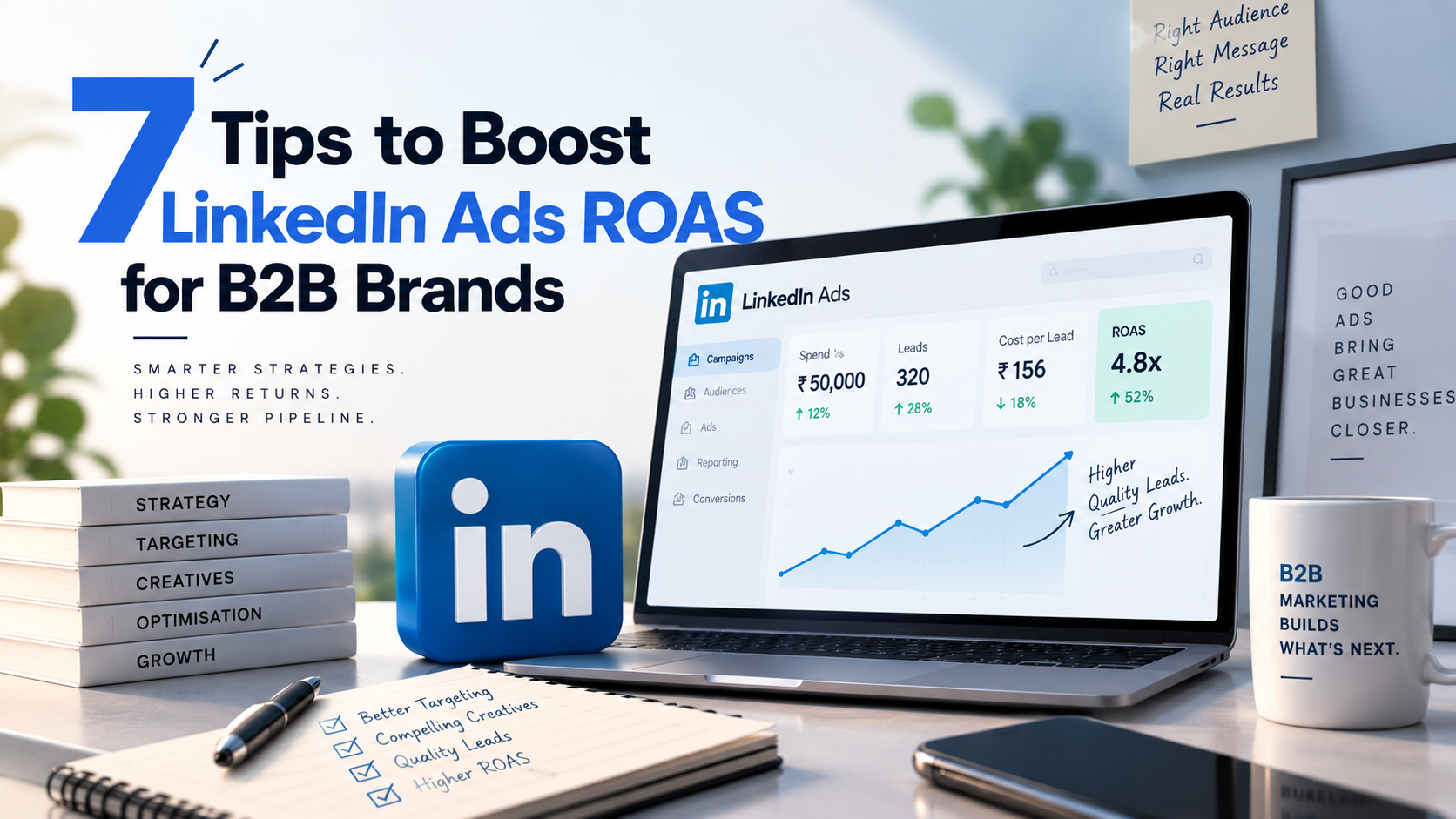
LinkedIn B2B marketing can help brands get in touch with decision-makers and create lead gen on LinkedIn, but having leads alone doesn’t mean that you have a good ROAS in your campaign. The problem remains to ensure that the budget will be used to reach the right audience and get quality traffic and better results.
Targeting audience, landing pages, tests of advertising, analysis of their cross-channel marketing, remarketing, and budgeting can be factors influencing the return on investment in LinkedIn advertising.
Below, you will find 7 tips to increase the boost ROAS in LinkedIn ads and run an effective campaign.
Why LinkedIn Ads ROAS Matters for B2B Brands
LinkedIn B2B ads are often used to reach a very specific audience, but just targeting the right people doesn’t always promise success. A campaign can bring clicks, engagements, and leads, but still overspend the budget that it brings in.
It makes ROAS an essential metric when it comes to LinkedIn lead generation because it helps brands compare how much money they spend on their advertisements with how much revenue they generate from that money. High ROAS means that your advertising campaign generates enough value to justify its own advertising cost on LinkedIn.
What Is Ideal ROAS and How to Calculate It?
A good ROAS depends on the industry, profit margins, business model, and marketing goals. A commonly used benchmark is 4:1, but there is no fixed ideal ROAS that is the same for every business.
A simple formula to calculate ROAS:
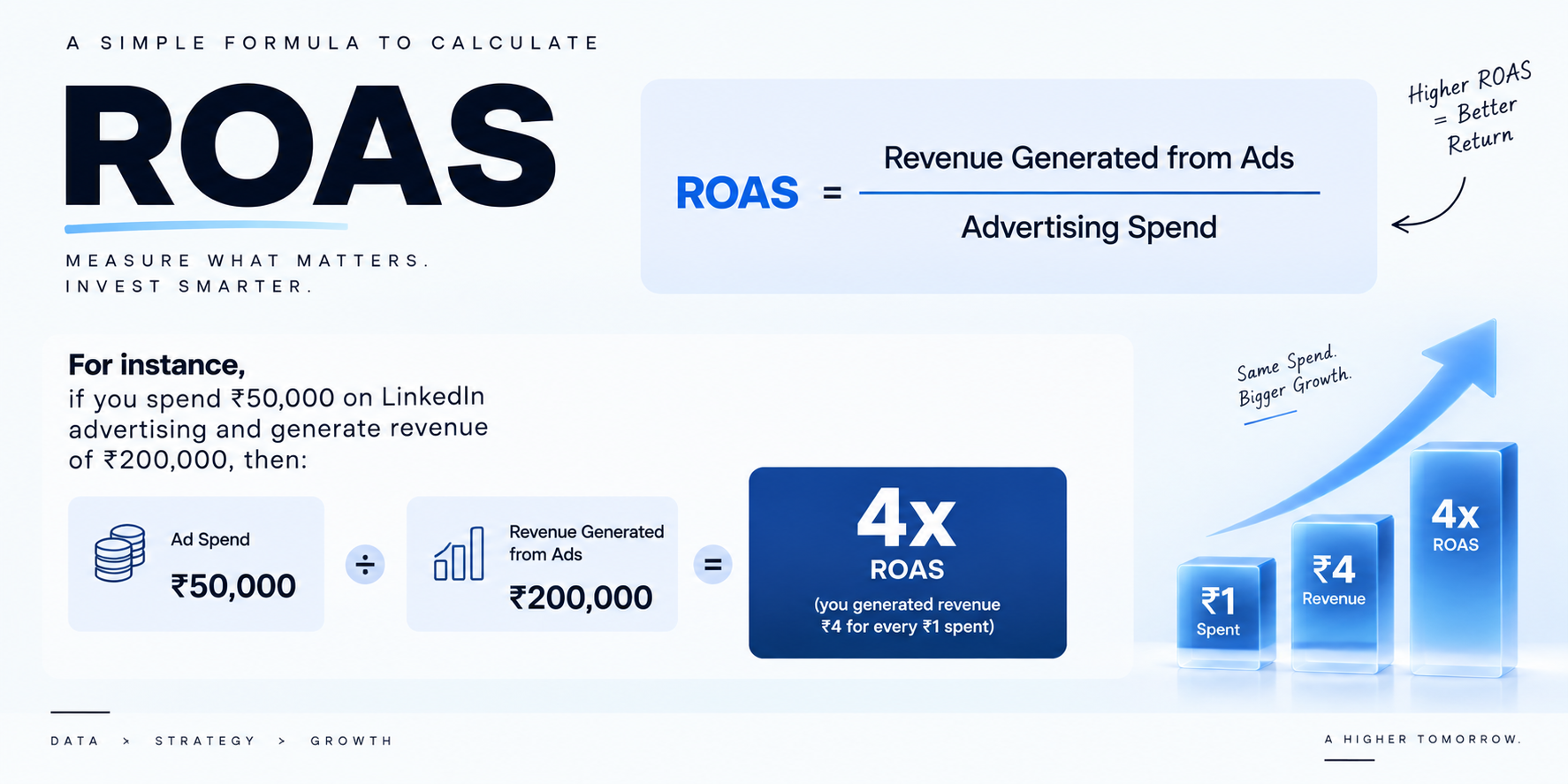
ROAS = Revenue Generated from Ads ÷ Advertising Spend
For instance, if you spend ₹50,000 on LinkedIn advertising and generate revenue of ₹200,000, then:
₹200,000 ÷ ₹50,000 = 4x ROAS (you generated revenue ₹4 for every ₹1 spent)
7 Effective Ways to Boost LinkedIn Ads ROAS for B2B Brands
1. Audience Segmentation
Audience segmentation will have a direct impact on your LinkedIn lead generation process for B2B, which will, in turn, affect your ROAS. If you target your campaign on B2B LinkedIn ads by using audience segmentation, you can ensure that your campaign is more effective, and it will have better ROAS.
Group audience based on:
- Interest
- Profile
- Geographic location
- Online behavior
- Industry
LinkedIn offers a filtering option to help you with audience segmentation, such as job title, industry, etc. When you start using these tools, they will assist with the challenges and needs of the audience in each segment. This will improve the chance of people taking desired actions upon seeing such relevant ads, which will apparently give you a good ROAS in LinkedIn B2B marketing.
2. Align Landing Pages With Your Ads
The page where your visitors will land should be aligned with your LinkedIn B2B ads. If the advertisement promises a free demo/audit and leads to the homepage, then the visitor may lose interest and abandon the webpage without following the desired path.
It is crucial for the headline, offer, and CTA to be relevant to the LinkedIn advertising campaign, as the visitors will be able to know what they clicked on right away. It is also possible to have different landing pages based on the target segment and the offer provided. Every page should have one single goal only, such as signing up for the demo, completing a form, or getting an audit.
3. Test Different Ad Copies and Formats
Not all audiences react to the same ad in the same way. Testing different versions of LinkedIn ad copy will allow you to find out which is more successful and will help to increase ROAS. Try testing variations by changing out one thing at a time and observing the results.
You can test:
- Ad copy: Try different messages
- Headlines: Present the offer in different ways
- CTAs: “Book a Demo” or “Learn More”
- Visuals: Try images, graphics, or videos
- Formats: Test single-image, carousel, or video ads
4. Ensure You Are Tracking Performance Across Channels
It is important to track your ads, but if you can measure all your marketing efforts on emails, websites, landing pages, your CRM system, and Google Analytics, then you will be able to optimize your budget and avoid unnecessary expenses.
Your potential customer sees your LinkedIn ad, visits your website, reads blogs, and looks through your customer reviews and your services. Cross-channel marketing helps you understand this journey.
It will help you identify which channels work in bringing quality leads and which help in convincing the audience to be an ideal customer. By keeping track of this information, you will be more likely to create more relevant content instead of showing them the same ads repeatedly.
5. Build Strategic Remarketing Campaigns
B2B customers will usually not decide after being exposed to an advertisement once, which is why remarketing ensures that you are able to connect with customers who have shown some interest in your business before. This requires showing advertisements to customers who have visited your website or even interacted with a previous campaign.
Instead of running the same ad, you might use a helpful piece of content depending on which stage your customer is in, such as case studies, features, demos, or consultations. It helps in making your linkedin B2B ads more relevant to ensure the user proceeds to the next level, supporting LinkedIn lead generation.
A strategic remarketing campaign will help increase the value of your ad based on the existing traffic, reduce the cost of ads, and improve ROAS.
6. Keep Eyes On The Daily Budget Spent
Improving LinkedIn Ads ROAS is not only about getting more leads; it is also about ensuring that you are spending your advertising budget in a manner that brings better returns. The campaign might be spending its entire budget on a daily basis, but it is not generating enough quality leads or conversions; your spending needs to be reviewed.
Constant budget tracking can help control ad spend as well as enhance ROAS for LinkedIn B2B marketing.
Keep a check on:
- Daily spend: Make sure your LinkedIn advertising spend stays within the planned limit.
- Cost per lead: Compare how you spend on LinkedIn leads.
- Lead quality: Ensure that leads are relevant to your business and have real potential.
- Conversions:
- Campaign performance: Using LinkedIn Campaign Manager, you can determine the campaigns that are performing well.
- Waste spend: Evaluate those ads that are spending and not leading to any results.
7. Ensure Proper Follow-Up By The Sales Team
Getting leads through LinkedIn lead generation is just the beginning; the sales team takes the job further. If there is no follow-up from the sales department, the LinkedIn ad campaigns will also not get the desired result, even though they were a success. A quick response is extremely important when someone has already shown interest in your business.
The sales team needs to be aware of where the lead came from as well as what they were interested in, because the conversation must sound relevant. The marketing and sales team should regularly provide shared feedback about the lead’s quality and conversion rate to help improve future LinkedIn ads for B2B.
This way, you can convert your advertising budget into improved LinkedIn ads ROAS.
Common LinkedIn Ads Mistakes That Can Lower ROAS
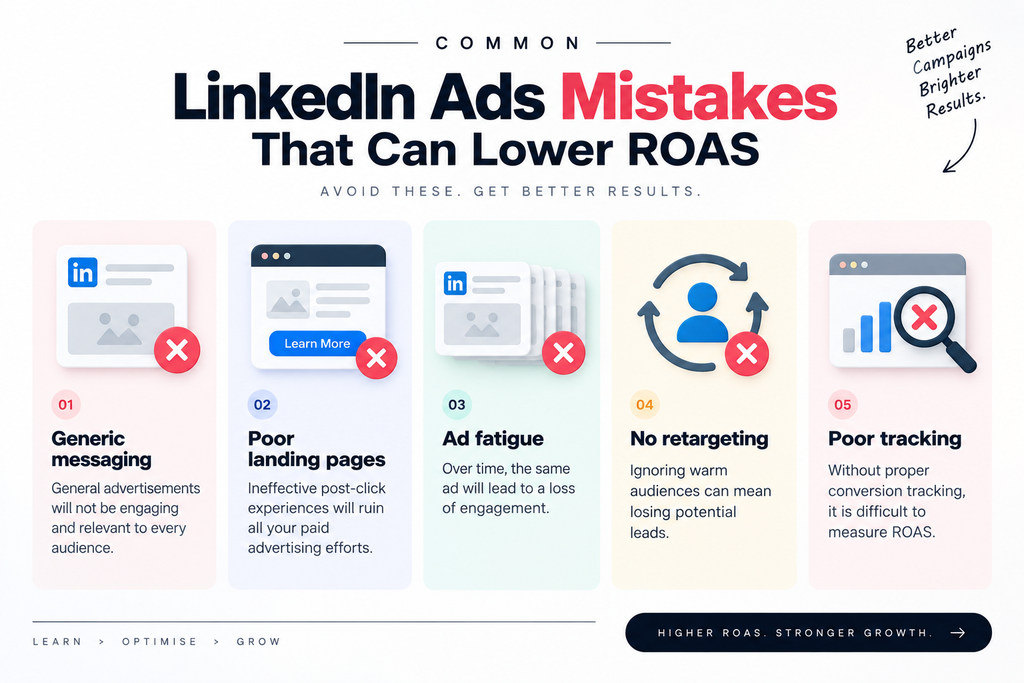
These are some common errors you should avoid if you want to improve your LinkedIn marketing campaigns:
- Generic messaging: General advertisements will not be engaging and relevant to every audience.
- Poor landing pages: Ineffective post-click experiences will ruin all your paid advertising efforts.
- Ad fatigue: Over time, the same ad will lead to a loss of engagement.
- No retargeting: Ignoring warm audiences can mean losing potential leads.
- Poor tracking: Without proper conversion tracking, it is difficult to measure ROAS.
Verdict – Improve LinkedIn Ads Returns With Digital Narada
Better ROAS starts with making smarter decisions about where your LinkedIn advertising budget goes. Digital Narada brings together marketing intelligence, data, customer behavior, and performance marketing to help businesses improve marketing efficiency and focus on outcomes that matter.
Connect with Digital Narada to discuss a potential opportunity to optimize your LinkedIn Ads to improve ROAS and get real value from your marketing investment.
FAQs
1. What is ROAS in LinkedIn advertising?
ROAS shows how much revenue an ad campaign generates compared with its ad spend. For linked in B2B ads, it helps measure the value of your LinkedIn advertising investment.
2. How can I calculate ROAS?
A simple formula to calculate ROAS is: ROAS = Revenue Generated from Ads ÷ Advertising Spend.
3. What is considered a good ROAS?
There is no standard good ROAS that is good for all industries, but according to LinkedIn, 4:1 is one of the most commonly cited ratios.
4. How can businesses improve LinkedIn ad ROAS?
Improving audience targeting, A/B testing, optimization of landing pages, ad budgeting, and retargeting might help improve the ROAS. These practices can increase the effectiveness of LinkedIn lead generation and help brands to get more value from LinkedIn leads.