
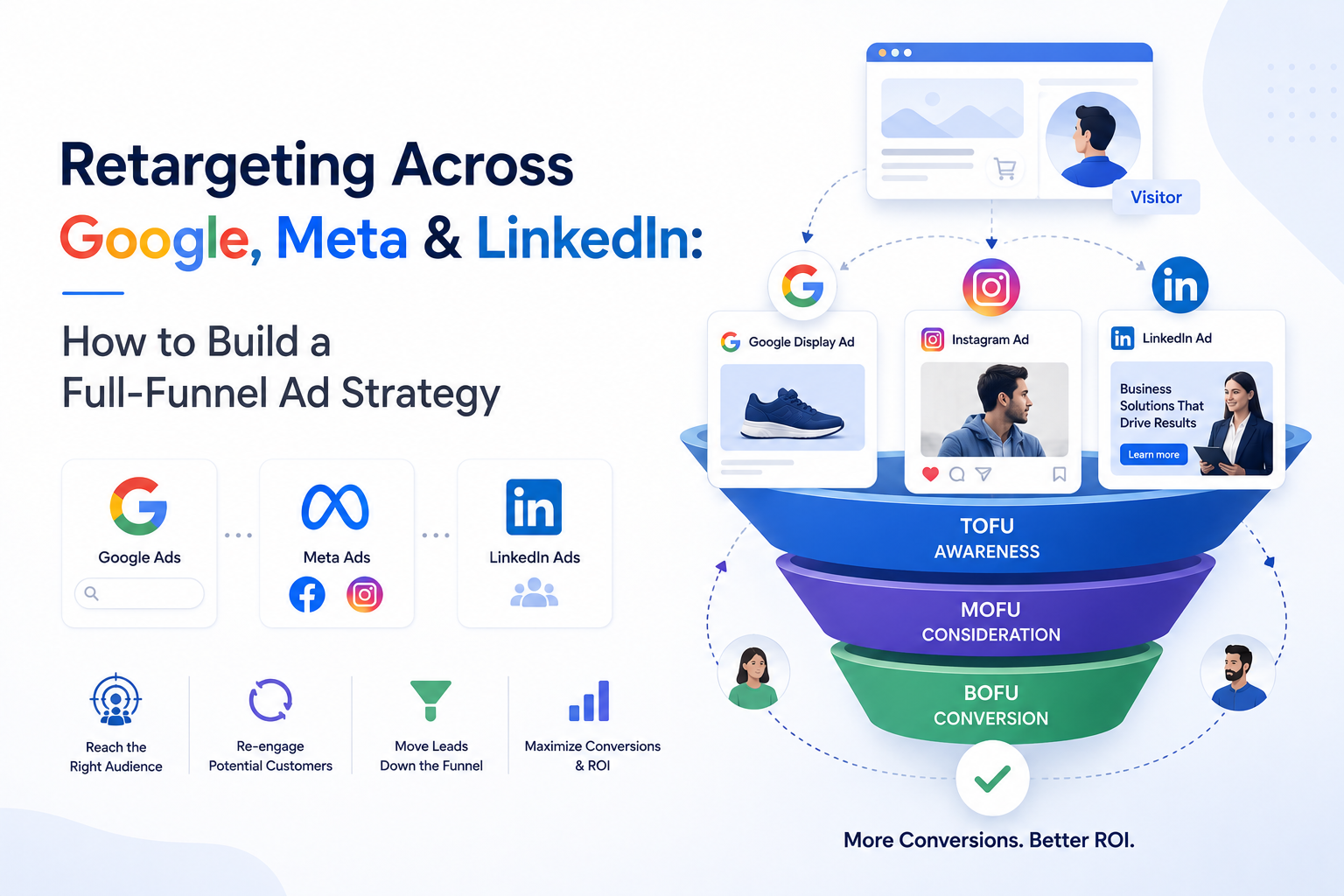
If you have ever searched for something on Google, there’s a high chance that you will see relevant ads on Instagram a few hours later, or you will see the same brand again on LinkedIn the next day.
At the beginning, I also experienced the same. And I used to think that companies did this because they had a lot of money to spend on advertising.
However, after working on ad campaigns on different platforms, I found out that it is not about spending more money. Instead, it is about creating a remarketing plan that uses Google, Meta, and LinkedIn to keep your brand in front of people at every stage of their buying process.
But why is there a need for retargeting? Why do businesses often trigger their ads campaigns to chase users across platforms?
Well! Most of the time, people do not buy something after seeing one ad. They look at options, visit different websites, read reviews, and use different social media platforms before they make any decision. If a business only uses one platform to advertise, they will probably lose potential customers along the way.
That is the main reason why successful brands use Google Ads, Meta Ads, and LinkedIn Ads together. They do not treat these platforms differently. Instead, they create a comprehensive plan that takes people all the way from finding out about their brand to actually buying something.
In this article, we will learn about remarketing and retargeting ads strategy and how they work together. We will also learn why businesses should advertise on these platforms and how to create ad campaigns that turn visitors into paying customers who actually buy from your brand.
What Is Retargeting And Remarketing?
Even though marketers often use the words together, remarketing and retargeting are slightly different.
Retargeting is about showing paid advertisements to people who have already interacted with your website, your landing page, or your advertisement. These people might have gone to your pricing page, looked at a product, or started to fill out a form but didn’t finish it.
Remarketing is about getting in touch with customers through different methods, like email marketing. Now platforms like Google and Meta use the word “remarketing” to talk about advertising campaigns that target people who have already visited earlier, which makes the two words the same in digital advertising.
A good remarketing ads strategy reminds people about your business and products instead of always looking for new customers. Since these people already know about your brand, they are more likely to take action than someone who sees your advertisement for the first time.
Google vs Meta vs LinkedIn – How Each Platform Contributes To Remarketing
| Platform | Best Use Case | Audience Intent |
| Google Ads | Search, Display, YouTube, Dynamic Remarketing | High purchase intent |
| Meta Ads (Facebook & Instagram) | Visual engagement and nurturing | Medium intent |
| LinkedIn Ads | B2B decision-makers and professionals | High-value business intent |

For example, imagine someone searches “CRM software” on Google and visits the pricing page.
Later, while scrolling Instagram, users see a customer success story through Meta ads remarketing. After some days, while checking LinkedIn, they see a case study served through LinkedIn Ads explaining how businesses can improve productivity using CRM software.
Instead of relying on one advertisement, you are creating chances for them to learn about your product and trust it via multiple places before you ask them to buy.
This is exactly how cross-platform advertising improves conversion rates with integrated LinkedIn ads, Meta Ads and Google Ads platforms.
Many businesses are running only Google Ads and not remarketing, so companies are missing these opportunities because they stop communicating once visitors leave their website. Modern buyers expect consistent interactions across different platforms.
If you’re already investing in paid campaigns, combining platforms can significantly improve your lead generation funnel.
7 Benefits Of Cross Platform Retargeting on Meta, Google, and LinkedIn
Running campaigns on Google, Meta, and LinkedIn does a lot more than just increase your brand visibility. It helps in creating a marketing system where each platform works together to support the customer journey, which ultimately helps businesses in getting better leads and results.
1] Reach Customers On Multiple Platforms
People use Google, Instagram, Facebook, and LinkedIn all day. Using a cross platform retargeting strategy keeps your brand visible on all these platforms, which increases the chances of customers coming back to your brand website.
2] Reduce Advertising Costs
It is usually cheaper to retarget people who have already interacted with your business than to try to reach new people. Using Google Ads remarketing and Meta campaigns helps businesses get a better ROAS while reducing acquisition cost.
3] Personalize Customer Experiences
Different users need different messages. By categorizing audiences based on their actions, businesses can deliver relevant remarketing ads that will improve engagement and conversions.
4] Increase Customer Lifetime Value
Retargeting doesn’t end after the first purchase. Businesses can promote upgrades, complementary products, or seasonal offers. Dynamic remarketing is especially effective for keeping existing customers in touch.
5] Improve Conversion Rates
When people see your brand repeatedly, they start to trust you. Using Google and Facebook remarketing along with LinkedIn remarketing helps in making your message stronger and encourages people to buy from you.
6] Make Better Data-Driven Decisions
Running campaigns across multiple platforms provides richer customer insights. Businesses can compare how different audiences interact with Google Search, Meta, and LinkedIn before making purchasing decisions. These insights help marketers refine their multiplatform ad strategy and allocate advertising budgets more effectively.
7] Strengthen Your Full Funnel PPC Strategy
Each platform has its own purpose. Google is good for people who are looking to buy something. Meta is excellent for sharing content. LinkedIn is good for building trust with professionals. All three platforms together create a complete full funnel PPC strategy.
Preparations Before Creating Retargeting Campaigns on Google, Meta and LinkedIn
A successful retargeting ad strategy starts long before your campaigns go live. To maximize conversions and avoid wasting ad spend, make sure your tracking, audience segmentation, creatives, and campaign goals are properly set up.
First, you need to install tracking tools to track customers’ behavior. These tools are Google Tag Manager with Google Ads conversion tracking, Meta Pixel, and the LinkedIn Insight Tag. These tools help you monitor user behavior, how many customers are clicking after seeing your ad, and build remarketing audiences.
Next, divide your audience based on their interactions, such as homepage visitors, product page viewers, pricing page visitors, cart abandoners, existing customers, or blog readers.
Showing different remarketing ads to each audience results in improved customer engagement and moves users smoothly through the lead generation funnel.
Your creatives should also be tailored to each platform while keeping a brand message.
| Platform | Recommended Creative |
| Google Display | Display banners |
| Google Search | Responsive search ads |
| Meta | Carousel Ads, Reels, Stories, Short Videos |
| Professional images, case studies, and whitepapers |
Before launching, define clear campaign goals such as lead generation, e-commerce sales, consultation bookings, or demo requests. Tracking KPIs helps optimize performance and scale campaigns effectively.
Finally, keep your messaging consistent across platforms. Google can capture search intent, Meta can build trust through storytelling, and LinkedIn can reinforce credibility with industry-focused content. This coordinated cross platform digital marketing approach creates a customer experience and significantly improves conversion rates.
How Google, Meta, And LinkedIn Work Together In A Full Funnel PPC Strategy
| Funnel Stage | Google Ads | Meta Ads | LinkedIn Ads |
| Awareness | Search Ads, YouTube Ads | Reels, Video Ads | Sponsored Content |
| Consideration | Display Remarketing | Carousel Ads, Testimonials | Case Studies, Lead Magnets |
| Conversion | Search & Dynamic Remarketing | Lead Ads, Conversion Campaigns | Demo & Consultation Ads |
| Retention | Customer Match | Engagement Campaigns | Webinars & Industry Updates |
So at the awareness stage;
- Google finds people who are looking for something.
- Meta shows them pictures and videos.
- LinkedIn finds professionals who might be interested.
When people are thinking about buying something, we show them ads with testimonials and case studies. This helps build trust.
When people are ready to buy, we focus on getting them to book a demo or ask for a quote. Google and Meta help with this.
After someone buys something, we keep talking to them. We offer them things to buy and invite them to webinars. This helps keep them as customers and makes them happy.
Google, Meta, and LinkedIn all work together to make this happen. They help move people from knowing about your brand to actually buying something.
Post-Purchase Retargeting Strategy: Keep Customers Engaged
Many advertisers stop running campaigns after generating a sale. That’s a missed opportunity. Existing customers are usually your easiest audience for selling again.
After a conversion, continue engaging customers with:
- Product upgrades
- New service launches
- Educational webinars
- Customer success stories
- Referral programs
- Loyalty offers
By this remarketing approach, you can increase customer’s lifetime value while reducing future acquisition costs through comprehensive advertising services.
Takeaway – Ready To Scale Your Advertising Across Every Platform?
If you’re already running ads but aren’t seeing the return you expected, the issue may not be your budget. It could be your funnel.
Digital Narada is a leading digital marketing ads agency that helps businesses across India and Dubai connect Google, Meta, and LinkedIn into one high-performing advertising system that generates qualified leads and measurable business growth.
Get your free full-funnel retargeting audit across Google, Meta, and LinkedIn today from Digital Narada. Discover where your campaigns are losing potential customers or not and how to turn more clicks into conversions.
FAQs
1] What is the difference between remarketing and retargeting?
Traditionally, remarketing focuses on connecting with customers who already bought from your platform through email, while retargeting focuses on advertisements to customers who visited your website before.
2] What are 7 benefits of cross platform retargeting?
7 benefits of cross platform retargeting include;
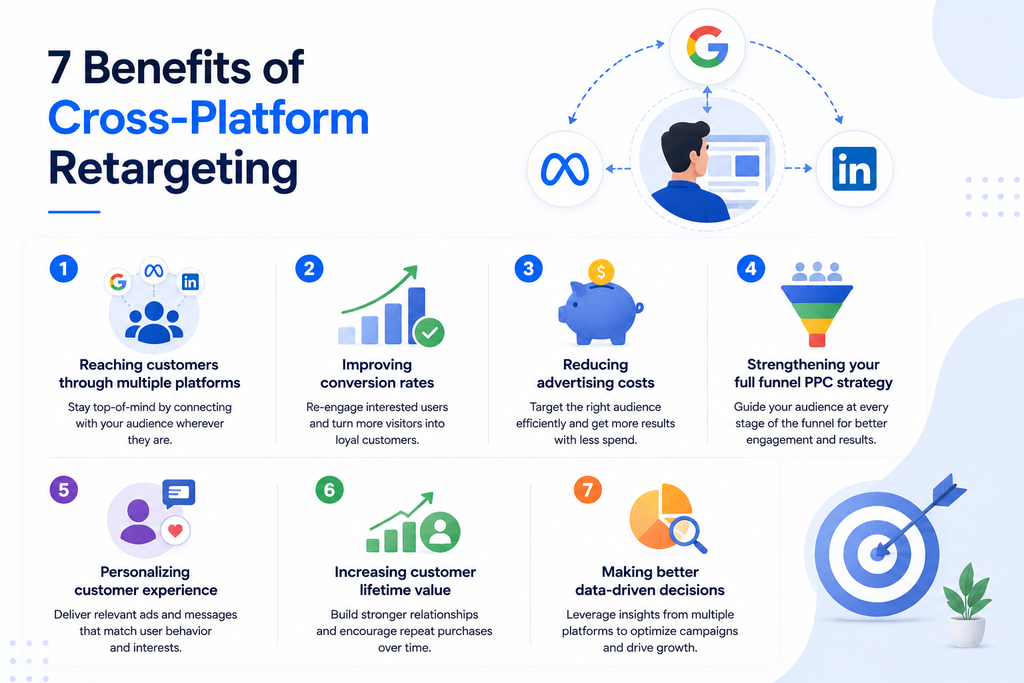
1) Reaching customers through multiple platforms
2) Improving conversion rates
3) Reducing advertising costs
4) Strengthening your full funnel PPC strategy
5) Personalizing customer experience
6) Increasing customer lifetime value
7) Making better data-driven decisions.
3] Is cross platform retargeting suitable for small businesses?
Yes, even small businesses can benefit from cross platform advertising because it results in higher conversion rates than targeting only new customers.
4] Which platform works best for B2B remarketing?
Generally, LinkedIn remarketing is the strongest option for B2B businesses because it targets professionals based on role, industry, company size, and seniority.
5] Should I run Google, Meta, and LinkedIn remarketing campaigns simultaneously?
Absolutely. In fact, combining these platforms results in building customer trust and improving overall conversion rates across all buying stages of customers.