
Everyone is talking about Dhurandhar 2: The Revenge. As of late March 2026, the Ranveer Singh-led, Aditya Dhar-directed spy thriller has obliterated box office expectations, crossing a staggering ₹300 crore net in India within just three days.
But for digital marketers and business owners, the real story isn’t the sheer volume of ticket sales—it is how the studios got there.
In an era where film production houses spend upwards of ₹30-50 crores on exhaustive 60-day city tours, reality show integrations, and aggressive ad blitzes, the makers of Dhurandhar took a radically different approach: Minimal Promotion and High-Impact Content Seeding. How did a product with a fraction of the traditional marketing noise generate the biggest opening weekend in Indian cinema history? Here is the breakdown.
1. The Power of “Strategic Silence”
Most brands operate on the assumption that more noise equals more sales. The marketing team behind Dhurandhar, led by Varun Gupta, proved that over-marketing can sometimes reek of desperation, while silence creates intrigue.
Instead of spamming the audience with endless promotional interviews, the marketing team relied on a “content first” approach. They explicitly chose not to oversell the movie with gimmicks or item songs. By starving the audience of excessive content, every single asset they did drop became a high-engagement digital event.
The Marketing Takeaway: You don’t always need the loudest microphone. If your core offering is strong, limiting access to your content creates artificial scarcity, making your audience lean in rather than scroll past.
2. The “FA9LA” Effect: Mastering Organic Content Seeding
Cinema marketing in 2026 doesn’t end with a trailer; it begins the instant a scene becomes remixable. The studios didn’t pay influencers to aggressively push the first Dhurandhar film. Instead, they engineered the now-iconic “FA9LA” moment.
The Scene: A high-BPM, visually striking sequence with minimal dialogue that required zero narrative context to understand. The Strategy: Because it was a repeatable, culturally neutral hook, edit communities and meme pages immediately hijacked the scene. Fans slowed it down, added transitions, and paired it with everyday humor. It became a free, decentralized distribution engine.
The Marketing Takeaway: Stop making rigid, polished corporate ads. Create “seed-worthy” assets—short, punchy, and adaptable hooks—that your audience can easily remix, share, and make their own. User-Generated Content (UGC) is the ultimate growth hack.
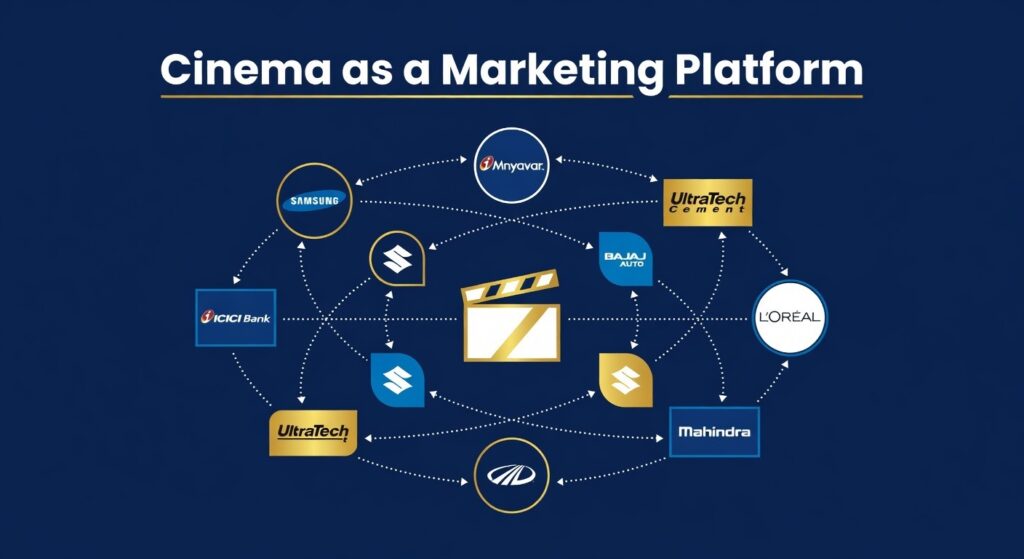
3. The cinema as a funnel marketing campaign
Here’s where Dhurandhar Part 2 (Dhurandhar: The Revenge, March 19, 2026) took things further. According to industry reports, more than 70 national brands and nearly 400 advertisers partnered around the sequel’s release. We’re talking L’Oréal, UltraTech Cement, Samsung, ICICI Bank, Mahindra, Maruti Suzuki, Bajaj Auto, Manyavar — brands across every major sector.
This wasn’t traditional product placement. It was co-branded storytelling, brand integrations that borrowed the film’s emotional equity and injected it into their own narratives.
Standout Brand Collaborations:
Godrej Enterprises Group
Godrej positioned its home lockers as the real “Dhurandhar” of household safety. They ran a co-branded digital campaign across YouTube, Connected TV, and Meta — borrowing the film’s themes of strength and resilience. This is narrative borrowing done right: the brand didn’t just slap its logo on a poster. It found a thematic bridge and built a story around it.
AJIO x Dhurandhar
AJIO launched an official merchandise line — graphic T-shirts signed by Ranveer Singh, fan-led apparel. This is community commerce: turning passionate audiences into walking billboards. The limited-edition angle creates urgency. The celebrity signature creates status. The fan community creates distribution.
Spykar: ‘Daur Apna Hai’
Spykar, a homegrown denim brand, launched a campaign around the film’s release anchored by the phrase “Daur Apna Hai” (This era is ours). Rather than a conventional tie-up, they built a cultural narrative around youth identity and individuality — themes that map to both the brand’s DNA and the film’s hero arc. They entered the promotional cycle early to ride both pre-release anticipation and post-release engagement.
The marketing Takeaway : The best brand-film collaborations find a thematic overlap, not just a visual one. Ask: what does this cultural moment represent, and how does our brand authentically belong in that conversation?
4. The “Video Call” Virality: Using High-Stakes Payoffs to Drive Urgency
On Day 0 of the Dhurandhar 2 release, a 20-second clip leaked online from the paid previews. It instantly set the internet on fire and triggered massive ticket sales for the weekend.
The Scene: Hamza (Ranveer Singh) finally corners the blood-soaked terrorist who famously insulted the nation in Part 1. While on a live video call with IB Director Ajay Sanyal (R. Madhavan), Hamza forces the terrorist to say “Bharat Mata ki Jai” as the ultimate revenge payoff. The Strategy: Whether the leak was accidental or a strategic “slip,” it operated on pure marketing psychology. It delivered an emotional catharsis to a pain point established in the first movie. The outrage over the spoiler actually fueled FOMO—fans rushed to book tickets immediately so the rest of the movie wouldn’t be ruined for them.
The Marketing Takeaway: Identify your customer’s biggest frustration (their “villain”) and position your product as the ultimate, satisfying resolution. When your audience sees exactly how you solve their problem, they will move fast to buy in.
5. The “Velvet Rope” Strategy: Monetizing FOMO
The most brilliant stroke of the Dhurandhar 2 campaign was the execution of its Day 0 strategy. On Wednesday, March 18, a day before the official global release, the studio opened “paid previews.”
This wasn’t heavily advertised, yet these previews alone generated an unprecedented ₹43+ crore. In marketing terms, this is the equivalent of an exclusive “Early Access” or “Beta” launch. It created a Velvet Rope effect. The die-hard fans who bought premium-priced tickets for the previews became brand ambassadors, hyping up the product to the masses.
The Marketing Takeaway: Create an inner circle. Offering early access to a new product or service for a premium price doesn’t just generate early revenue; it manufactures the Fear Of Missing Out (FOMO) for the broader market.
6. The “Post-Credit” Strategy: Maximizing the Post-Purchase Experience
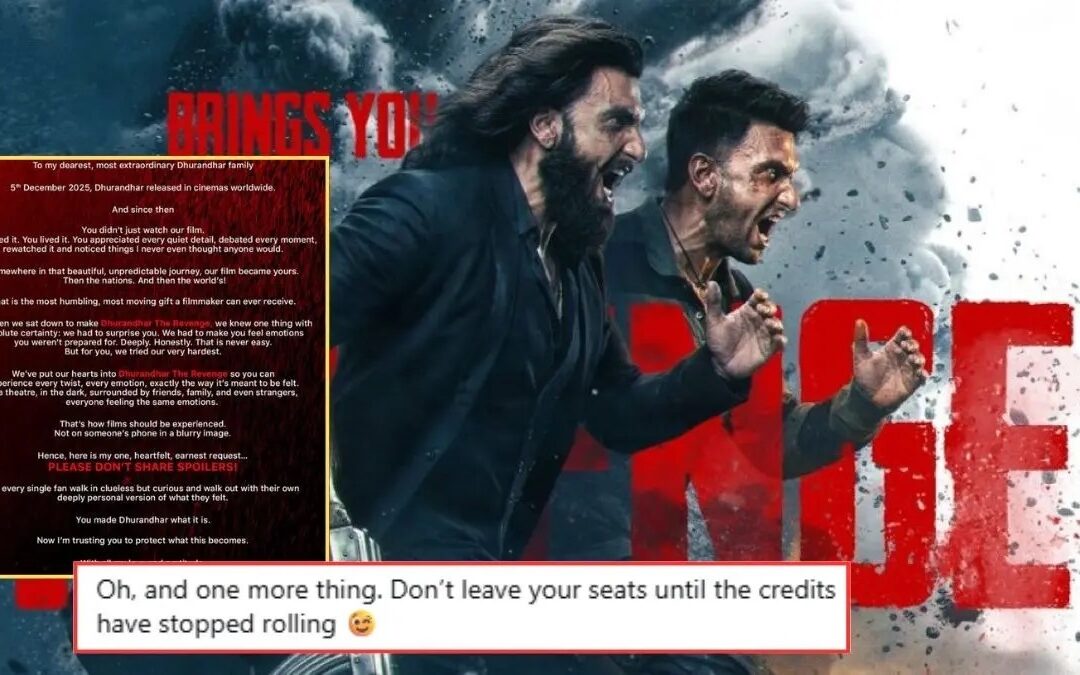
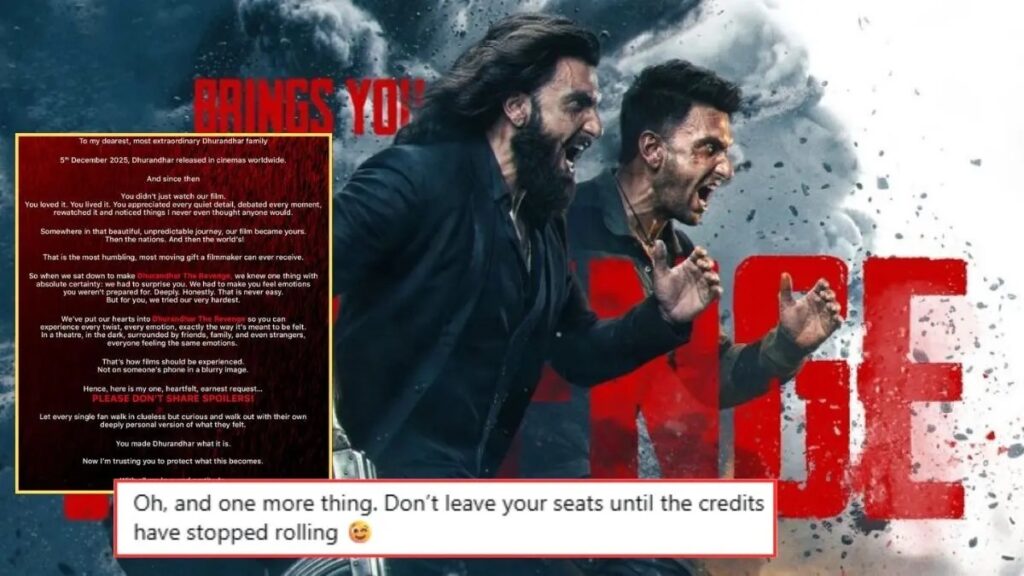
Ahead of the sequel’s release, director Aditya Dhar posted a heartfelt note to fans, urging them not to share spoilers. But it was his final line that broke the internet: “Don’t leave your seats until the credits have stopped rolling.”
This wasn’t just a fun Easter egg; it was a masterstroke in audience retention and market disruption. By explicitly teasing a post-credit scene, Dhar accomplished two massive business goals simultaneously:
- Extended User Engagement: He kept the audience in the theater long after the core product ended, forcing them to sit through the credits and absorb the underlying brand ecosystem.
- The “Earned Media” Engine: The moment audiences left the theater, social media and forums like Reddit were immediately flooded with speculations about Dhurandhar 3 and the rumored “Mayhem” title. This generated millions of impressions in free PR.
The Marketing Takeaway: In digital marketing, the transaction doesn’t end when the customer clicks “Buy.” What does your post-purchase experience look like? Are your order confirmation pages, onboarding emails, or “Thank You” screens just dead ends? Dhar proved that the end of one product should immediately serve as the top of the funnel for the next.
7 Marketing Lessons from Dhurandhar (That Work for Any Brand)
01 Scarcity of Presence = Increase in Value
Ranveer Singh’s absence from the media post-trailer made audiences want him more. If your brand or spokesperson is everywhere, you’re training your audience to ignore you. Curate your visibility.
02 Lead with Emotion, Follow with Information
The teaser sold a feeling. The trailer sold a story. The reviews sold the experience. Don’t lead with features — lead with the world your product creates.
03 Your Hero Asset Must Do the Heavy Lifting
One great trailer > 10 mediocre interviews. Invest in your cornerstone content. A single outstanding ad, video, or campaign can outperform months of average output.
04 Brand Collaborations Should Borrow Themes, Not Just Logos
Godrej didn’t just put the Dhurandhar logo on an ad. They told a story about strength. Find the thematic bridge between the cultural moment and your brand’s values.
05 Build Franchises, Not Campaigns
The most powerful marketing doesn’t end when the campaign ends. Part 1 fuelled Part 2. Design your marketing ecosystem so that every piece of content builds demand for the next.
06 Timing Is Strategy
Festival windows, competitor gaps, international time zones for trailer drops — every timing decision in Dhurandhar’s release was intentional. Your campaign timing should be too.
07 Ensemble Casts = Multi-Segment Reach
Ranveer brings one audience. Akshaye Khanna brings another. Sanjay Dutt brings a third. R. Madhavan brings a fourth. Multi-creator, multi-spokesperson campaigns work for the same reason: they expand your reach without diluting your message.
The Bottom Line for Your Business
The historic success of Dhurandhar: The Revenge is a masterclass in modern positioning. It proves that when you build an exceptional product, engineer remixable moments, and orchestrate your release to trigger human psychology, you don’t need to out-spend your competitors on ads. You just need to out-position them.
Are you ready to stop relying on aggressive, high-cost ad blitzes and start building campaigns that generate organic frenzy? At Digital Narda, we specialize in the kind of strategic positioning that turns your brand into an industry event. Let’s talk.