
Two tools. One very common mix-up.
A founder runs a D2C skincare brand from Pune. Her Google Ads manager calls to say: “We should move to AI Max.” Three weeks later, another consultant calls and says: “You should be on Performance Max.” She asks both of them if it is the same thing. Neither gives her a straight answer.
She is not alone. Since Google announced AI Max for Search campaigns in May 2025, “AI Max” and “Performance Max” have been used interchangeably by advertisers, agency teams, and even some Google reps despite being fundamentally different products that serve different purposes and suit very different situations.
Here is the short version before we get into the detail: AI Max is an upgrade layer you add to your existing Search campaigns. Performance Max is a completely separate campaign type that runs your ads across every Google channel simultaneously. One gives you more intelligence while keeping you inside Search. The other hands Google the wheel across the entire ad ecosystem.
At Digital Narada, we have been running Google Ads for Indian businesses across B2B SaaS, D2C, and services since before Smart Campaigns were even a thing. This guide is the definitive breakdown of both products: what they are, how they differ, which one suits your business, and whether you should be running both.
If your fundamentals need a review first, start with our guide on why Google Ads get expensive and how to fix them before adding automation layers on top of a broken foundation.
What is Google AI Max ?and what it actually is not
Let us be precise, because this is where most of the confusion starts.
AI Max for Search campaigns is not a new campaign type. It is not a replacement for your existing Search campaigns. It is an optional, one-click suite of AI-powered enhancements you enable inside your current Search campaigns announced at Google Marketing Live on 21 May 2025 and globally available from Q3 2025.
Think of it like this: your Search campaign is the car. AI Max is a software upgrade that makes the engine smarter, the suspension more adaptive, and the navigation more predictive. You are still driving the same car. You are just driving it better.
What is Performance Max ?and why it divides advertisers
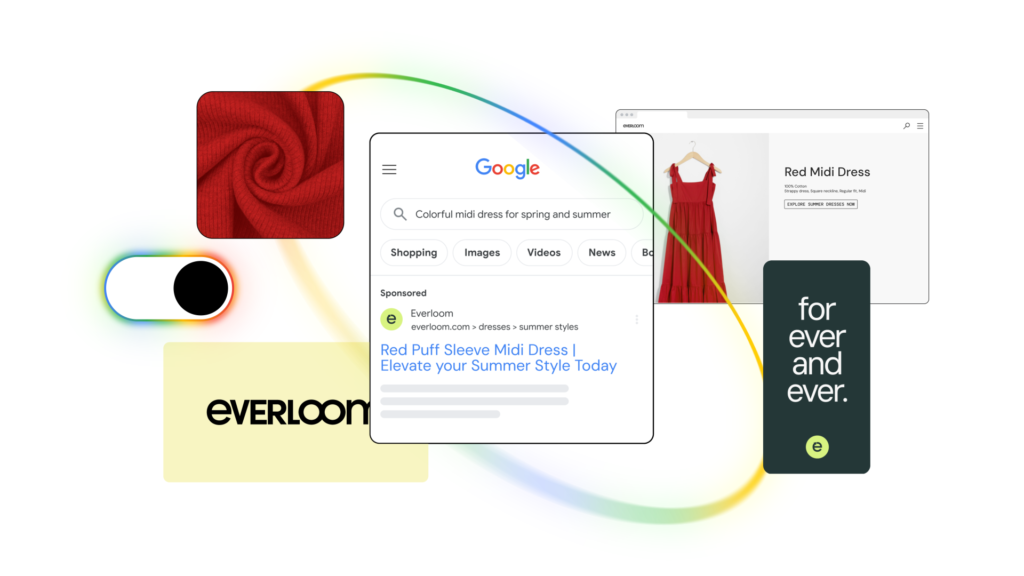
Performance Max (PMax) is a completely separate campaign type. It is not an enhancement to an existing campaign, it is its own campaign, with its own budget, its own bidding, and its own logic. And it does not live inside Search.
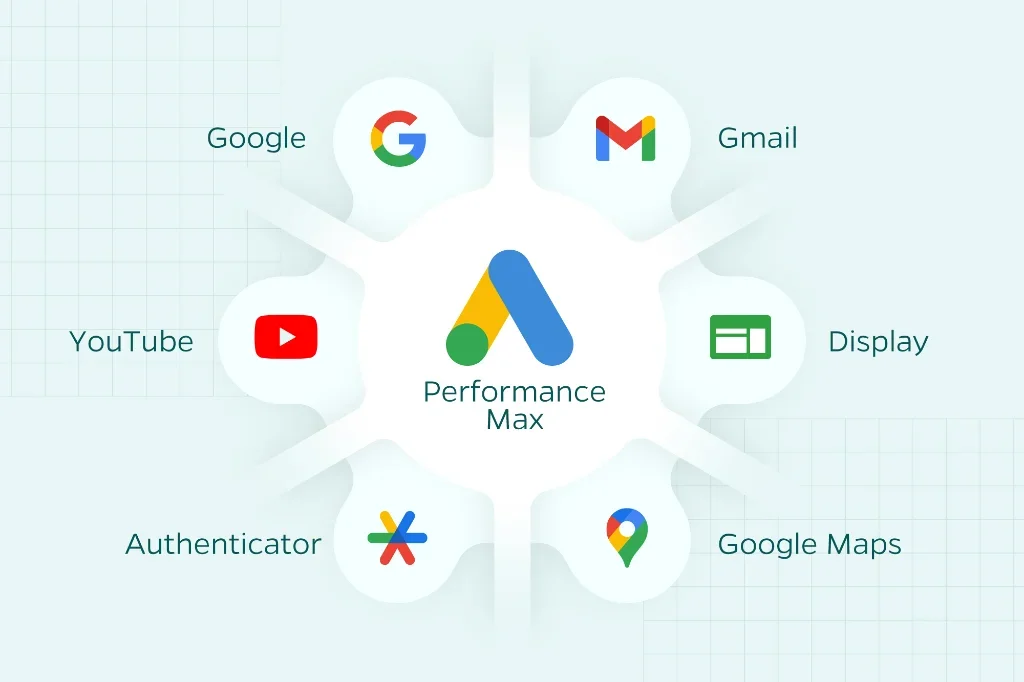
When you run a Performance Max campaign, a single campaign serves ads across Search, Shopping, Display, YouTube, Discover, Gmail, and Google Maps simultaneously. You give Google your creative assets headlines, descriptions, images, videos, audience signals and Google’s AI decides where, when, and to whom to show your ads across all of those channels to maximise your conversion goal.
This is either the most powerful thing about PMax or the most terrifying thing about it, depending on how much you like knowing where your budget is going.
AI Max vs Performance Max: the differences that actually matter
Here is the comparison that most articles get wrong because they compare them as if they are competing alternatives. They are not. They solve different problems and can run alongside each other. But the differences are real and consequential.
What they are
- AI Max: an optional feature layer added to an existing Search campaign. Not a campaign type
- Performance Max: a standalone campaign type that spans all Google inventory
Where ads appear
- AI Max: Google Search only. That is the entire scope. It makes your Search campaign smarter it does not take you outside of Search
- Performance Max: Search, Shopping, Display, YouTube, Discover, Gmail, and Maps. The full Google ecosystem from a single campaign
Advertiser control
- AI Max: you keep keyword-level reporting, negative keywords, ad group structure, and can toggle individual features on or off. High control, AI-augmented
- Performance Max: Google controls channel allocation, bid strategy, audience targeting, and placement. You provide assets and goals. Low control, high automation
Transparency
- AI Max: full search term reporting. You can see AI-expanded matches labelled separately from traditional keyword matches in the search terms report so you know exactly what the AI triggered
- Performance Max: asset group performance, channel-level spend breakdowns, and conversion data but no keyword-level or query-level detail in the traditional sense
Best suited for
- AI Max: businesses that want to grow their Search reach without losing control of their campaign structure. Particularly effective for accounts where Search campaigns have hit a volume ceiling
- Performance Max: businesses with product-based advertising needs, strong creative asset libraries, healthy conversion data, and a willingness to let Google’s AI allocate budget across channels
Creative requirements
- AI Max: your existing Search ad copy is the foundation. Text customisation enhances it but you do not need images or video
- Performance Max: requires a full creative suite, multiple headlines, descriptions, images in several sizes, and ideally a video. Without video, Google will auto-generate one from your images, which is rarely optimal
What this means specifically for Indian businesses
Most frameworks for AI Max and Performance Max are written with US or UK advertisers in mind. The Indian Google Ads environment has meaningful differences that change how these products behave.
Search behaviour in India is still evolving
Indian users search differently. Voice search in Hindi, Tamil, Telugu, and other regional languages is growing rapidly. Long-tail, conversational queries are increasingly common as AI Overviews reshape how people interact with Google Search. AI Max’s keywordless technology and conversational targeting features are particularly well-positioned to capture this shift especially for businesses targeting Tier 2 and Tier 3 cities where search behaviour is less predictable than in metros.
Budget constraints make control more important
The median Indian SME running Google Ads spends between ₹20,000 and ₹80,000 per month. At this budget level, every misplaced click is a meaningful percentage of monthly spend. Performance Max’s limited transparency makes it harder to quickly identify and eliminate wasted spend a real problem when your daily budget is ₹1,500 and three irrelevant clicks can cost you ₹300.
AI Max, by contrast, gives you the visibility to catch and fix problems fast. For smaller Indian advertisers, this control advantage frequently outweighs the potential reach benefit of PMax.
B2B buying intent in India is specific and high-stakes
Indian B2B purchases whether for enterprise software, industrial equipment, or professional services are high-consideration decisions driven by very specific search intent. A CFO searching for “GST-compliant payroll software for 500 employees” knows exactly what she needs. Broad match expansion from either AI Max or PMax that turns this into a trigger for generic “HR software” queries wastes the budget and misses the buyer.
For B2B advertisers in India, AI Max with carefully managed text customisation exclusions is almost always preferable to PMax because B2B intent precision matters more than cross-channel reach.
Creative asset production capacity
Performance Max requires a full creative suite: images in multiple aspect ratios, videos (ideally produced, not auto-generated), multiple headlines and descriptions. Many Indian SMEs and even mid-market companies do not have a content production pipeline that supports this. Launching PMax without strong creative assets is the surest way to get mediocre results and then blame the platform.
If your business is still building its digital marketing foundation, read about how B2B email marketing and Google Ads can work together to generate and nurture leads before you layer in more complex campaign types.
Which one should you use? A decision framework
Stop asking which one is better. Start asking which one is right for your situation right now. Here is a practical framework:
AI Max if:
- You are already running Search campaigns that are performing reasonably well but have plateaued in volume
- Your account has strong negative keyword lists and well-structured ad groups (AI Max amplifies good structure it does not fix bad structure)
- You want to expand your reach on Search without rebuilding your campaign architecture
- You are a B2B company, a high-consideration service business, or any advertiser where buyer intent precision is more important than cross-channel reach
- Your monthly budget is under ₹1,00,000 and you need visibility into what is driving results
- You are in a regulated industry (healthcare, financial services, legal) where brand control over ad copy matters
Use Performance Max if:
- You are an e-commerce business with a Google Merchant Center product feed and a genuine need for Shopping inventory access
- Your account generates more than 50 conversions per month consistently PMax needs this data to optimise
- You have a full creative asset library: produced video, professionally shot product images, multiple copy variations
- Your goal is full-funnel reach you want to build awareness on YouTube and Discover while simultaneously capturing Search intent
- You are launching a new product and need maximum visibility across Google’s inventory quickly
Use neither yet if:
- Your conversion tracking is not set up correctly and both products optimize toward your conversion goal. If that goal is wrong or mismeasured, the AI optimises toward the wrong outcome at scale
- Your Search campaigns are losing money on basic keywords add automation to a broken foundation and you make losses faster and at lower CPCs
- Your monthly budget is under ₹20,000 neither product has enough data or frequency to perform meaningfully at this spend level
Not sure where you stand? Book a free Google Ads audit with Digital Narada we will review your current account structure and tell you exactly which campaign types your account is ready for.
Can you run both? Yes here is how
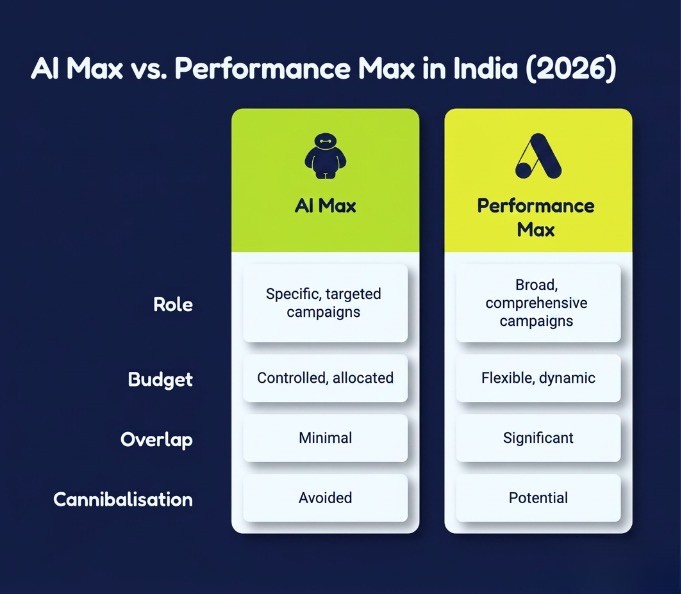
The best-performing Google Ads accounts in India in 2026 do not choose between AI Max and Performance Max. They use both deliberately, with clear roles for each, structured to avoid overlap and budget cannibalisation.
The honest bottom line
AI Max and Performance Max are not rivals. They are not interchangeable. And neither of them is a shortcut.
AI Max makes your Search campaigns smarter while keeping you in the driver’s seat. It is the right move for most Indian businesses running Search campaigns that have hit a ceiling as long as the foundation (negative keywords, landing pages, conversion tracking) is solid before you enable it.
Performance Max is Google’s most powerful full-funnel tool and its most unforgiving one. It rewards advertisers who bring strong conversion data, rich creative assets, and active monitoring. It punishes those who launch it as a hands-off experiment and check back in after 30 days.
For most Indian businesses in 2026 particularly B2B companies, service businesses, and SMEs working with tight budgets, AI Max is the more immediately practical choice. Performance Max earns its place in your account once you have the data, the creative, and the monitoring discipline to run it properly.
If you are not sure which one your account is ready for or if you are running both and not sure they are set up correctly, book a free Google Ads audit with Digital Narada. We will look at your account structure, your conversion data, and your creative assets, and give you a clear recommendation backed by what the numbers actually say.