
Every year, the Indian Premier League doubles as India’s biggest marketing exam. 67 days. 600 million+ viewers. And brands competing not just for eyeballs, but for memory.
IPL 2026 is different though. The usual suspects are gone. New categories are stepping up. And the entire advertising playbook is being rewritten in real time.
If you’re a marketer — whether you manage a ₹10 lakh campaign or a ₹10 crore one — this season has lessons you can’t afford to miss.
The Big Picture: IPL 2026 By the Numbers
Before we get into who won and who fumbled, here’s what the landscape looks like this season:
- Ad spends projected at ₹4,900–5,200 crore — up roughly 20–30% YoY
- 600 million+ digital viewers expected, largely on JioHotstar
- 47 new brands and 10 new categories entered the IPL ad ecosystem in just the first 13 matches
- Advertiser count dropped from 65+ to 45+ brands compared to IPL 2025 — but those remaining are spending more purposefully
- Real-money gaming (RMG) — once nearly 20% of total IPL ad budgets — has exited entirely following India’s Online Gaming Act, 2025
That last point is the biggest story of the season. And understanding it unlocks everything else.
What Brands Got RIGHT in IPL 2026
1. Google Gemini: The Boldest Bet of the Season
Google didn’t just show up to IPL 2026. It took over.
In a ₹270 crore, three-year deal with BCCI, Google’s AI platform Gemini became one of the most visible commercial partners of the tournament. For context — this is the largest sports marketing bet by an AI brand in India, ever.
And it worked on multiple levels:
- Timing: With Dream11 and other RMG brands vacating premium inventory, Gemini stepped into a less cluttered field
- Intent: Selling an AI platform isn’t about features — it’s about normalising a behaviour. IPL’s 600M-viewer reach is unmatched for driving mass awareness and trial
- Positioning: Being the top advertiser in India’s most-watched event signals market leadership. Google topped IPL ad charts in the first four matches — the first time a tech company has led the rankings
The lesson: When your competitors pull back, that’s not a signal to follow — it’s an opening to dominate.
2. Non-Endemic Brands Discovering IPL as a B2B Play
One of IPL 2026’s most underreported stories is the entry of B2B-adjacent categories — BFSI, fintech, real estate, edtech, and even infrastructure brands.
JK Lakshmi Cement’s Deputy MD said it best: “The contractor, the engineer, the homebuilder making material decisions are part of IPL viewership — not separate from it.”
This is a significant mindset shift. IPL has historically been treated as a B2C platform. But when your decision-makers are also cricket fans sitting in front of JioHotstar at 7:30 PM, IPL becomes a surprisingly effective brand-building play for B2B categories too.
The lesson: Audience profiling beats category assumptions. If your buyer watches IPL, you belong there.
3. D2C Brands Using IPL as a Trust Signal — Not Just a Reach Play
Emerging D2C brand Chupps is a quiet winner this season. Their Brand Lead noted that IPL accounts for 10–15% of their annual marketing budget — not because it’s cheap, but because it works across channels simultaneously.
For a brand selling across general trade, modern trade, and D2C, a single IPL presence builds credibility with distributors, shelf placement, and end consumers at the same time.
The lesson: IPL doesn’t just buy reach. For growing brands, it buys legitimacy.
4. Quick Commerce Brands: Right Message, Right Moment
With RMG out, quick commerce brands (think Blinkit, Zepto, and their cohort) stepped into premium inventory with near-perfect audience-message fit.
A viewer watching a live IPL match is already high-intent, impulse-receptive, and on a device. A 10-minute delivery promise at 8 PM during a nail-biting over is as contextually relevant as advertising gets. How meta ads and Google ads serve different campaign goals
The lesson: The best campaigns aren’t just creative — they’re situationally intelligent.
5. Integrated Partnerships Over One-Off Broadcast Buy
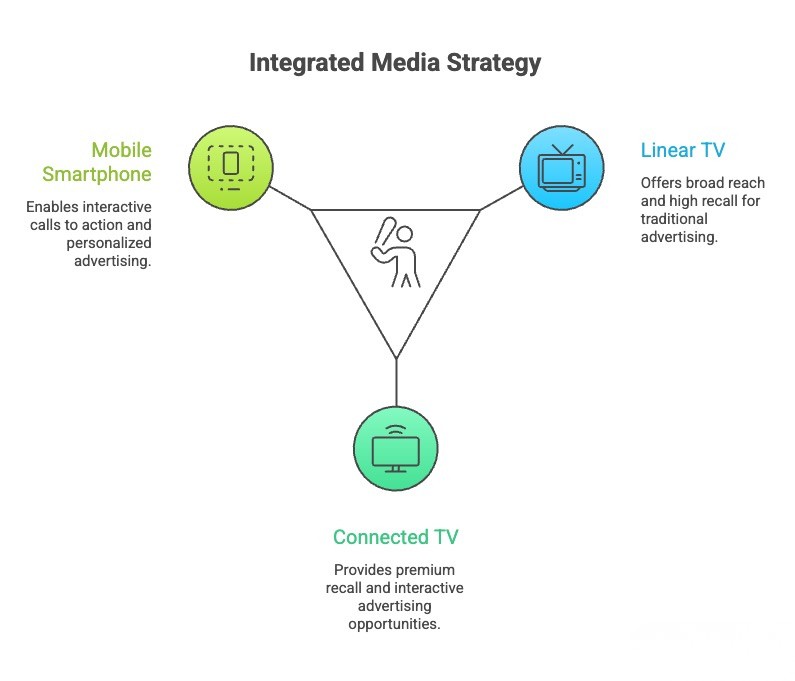
The brands generating real recall this season aren’t the ones running the most ads. They’re the ones building ecosystem presence — content integrations, on-ground activations, team partnerships, creator collaborations, and social amplification layered on top of broadcast. Just like Dhurandhar proved, silence and positioning can outperform media spend.
Industry experts consistently pointed to the same theme: “Media-heavy approaches drive reach, but integration builds recall.”
The lesson: Visibility ≠ memorability. Integration wins.
What Brands Got WRONG in IPL 2026
1. The RMG Lesson — Betting Your Brand on Regulatory Grey Areas
Dream11, My11Circle, MPL — these brands built their growth almost entirely on IPL. And it worked brilliantly, until it didn’t.
The 2025 Online Gaming Act effectively wiped out ₹1,500–2,000 crore in annual IPL-linked advertising overnight. Dream11’s ₹358 crore jersey sponsorship for the Indian team was gone. Billions in brand equity, gone with the regulatory shift.
This isn’t a criticism of those brands — they executed brilliantly within the rules at the time. The lesson is structural: when your entire marketing stack depends on a single platform and a permissive regulatory environment, you’re one policy change away from collapse.
The wrong move: Building category dependence without diversification.
2. Showing Up Without a Strategy
IPL 2026 saw advertiser count drop by about 31% vs. last season. That sounds alarming. It isn’t.
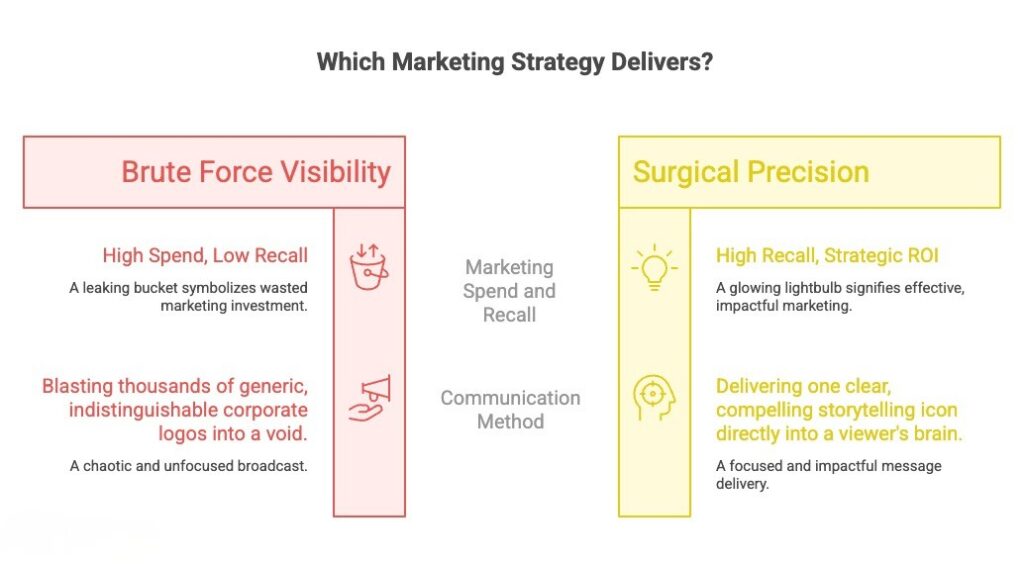
What it signals is that brands which were previously chasing visibility for visibility’s sake — buying IPL airtime without clear objectives, creative relevance, or measurement frameworks — have largely stepped back. The brands that remain are spending more per campaign, not less.
But not everyone got the memo. Some brands continue to run generic 30-second spots that feel indistinguishable from every other advertiser on the break. In a cluttered environment, forgettable is expensive.
The wrong move: Buying reach without earned attention.
3. Ignoring the CTV Shift
Connected TV now accounts for 35–40% of IPL viewership in 2026 — and CTV inventory delivers 8–10x higher ad recall than mobile. Yet many brands are still optimising their creative for mobile-first, 6-second pre-rolls.
JioHotstar has aggressively priced CTV inventory upward (CPM moved from ₹480 to ₹600), signalling where premium audience attention is concentrating. Brands that didn’t rethink their format strategy for the big screen are leaving recall on the table.
The wrong move: Running the same creative across every screen.
4. Missing the Digital-First Audience
JioHotstar moved to a paid-only model in 2026 (₹149/month minimum). This seems like a shrinkage problem — fewer viewers, right? Wrong.
The digital audience is now self-selected, higher-intent, and premium. Brands treating digital IPL inventory as a cheaper TV alternative are misreading the room. This is now performance marketing territory with brand-level reach — a combination that almost doesn’t exist anywhere else.
The wrong move: Treating paid digital streaming audience as a downgrade from TV.
The Bigger Marketing Shift IPL 2026 Is Revealing
IPL 2026 isn’t just a cricket season. It’s a mirror for where Indian marketing is heading.
From visibility to efficiency. Fewer brands, higher per-brand commitment, more measurable outcomes.
From gaming to AI and quick commerce. The categories defining this season — Google Gemini, OpenAI, Blinkit-tier brands — are the categories defining India’s next decade.
From mass reach to contextual precision. Jio’s first-party data, Nielsen’s real-time verification, CTV’s premium inventory — for the first time, IPL advertising can be held to performance standards.
From TV-first to ecosystem-first. The tournament is no longer a cricket league. It’s a full-funnel marketing platform.
3 Takeaways Every Marketer Should Walk Away With
1. Efficiency is the new scale. The brands winning IPL 2026 aren’t the biggest spenders — they’re the most deliberate ones. Before your next campaign, ask: what does winning look like for us, specifically?
2. Category shifts create opportunity. RMG’s exit opened ₹1,500+ crore in inventory. The brands who moved fast — Google, quick commerce players, BFSI — claimed premium placement at a fraction of what it would have cost two seasons ago. Watch for category vacuums in every platform you work on.
3. The screen matters as much as the message. CTV, mobile, TV — same viewer, completely different context and recall rate. One creative doesn’t serve all three. Build for the screen, not just the audience.
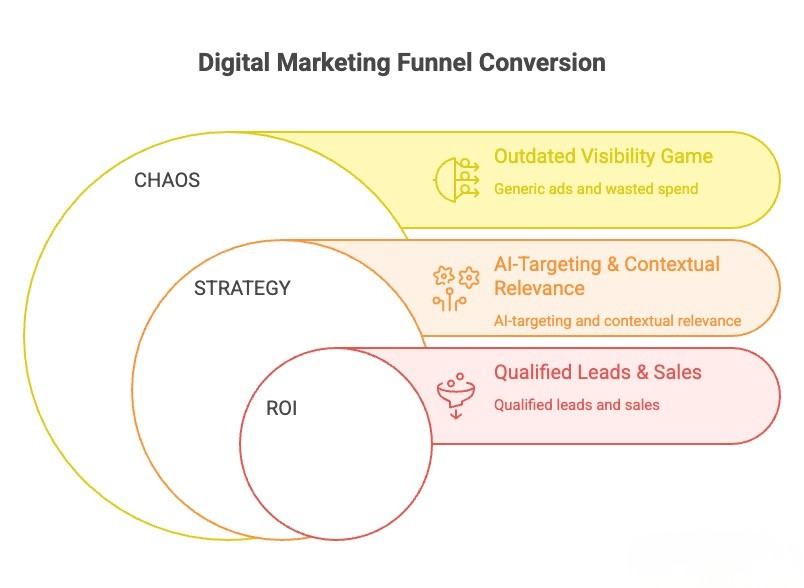
IPL 2026 is proving that the playbook isn’t about budget. It’s about who understands the moment better. And right now, the brands that understand that advertising is shifting from a visibility game to a precision game are the ones writing the next chapter.
The Bottom Line: Adapting to the 2026 Ecosystem
The marketing playbook has been completely rewritten this season. The brands that are winning the IPL 2026 attention war aren’t necessarily the ones with the biggest broadcast budgets. They are the ones embracing functional tech (like Gemini), showcasing extreme agility (like Blinkit), and leveraging community-driven creators (like Zepto).
If your current ad campaigns are feeling stale, expensive, and yielding lower quality leads, it is time to modernize your approach.
At Digital Narada, we don’t just run ads; we build dynamic, data-driven digital marketing ecosystems that adapt to market shifts in real-time. Whether you need to integrate advanced AI workflows, pivot your messaging strategy, or launch a highly targeted B2B demand generation campaign, our team engineers solutions that cut through the noise and deliver measurable ROI.
Stop relying on outdated marketing tactics. Let’s build a strategy that puts your brand in the big leagues.